

Enjoyed this recipe? Add us to your Google Search Preferred Sources:
This Eurasian Beef Smore is a hearty homemade beef stew packed with beef, celery, carrots, leek, potatoes and cabbage. With a twist. We take the classic British beef stew and add some Asian spices and flavours. Result? Think Oliver Twist.
Estimated reading time: 7 minutes

What Makes a Good Beef Stew?
A great beef stew isn’t complicated. It’s three things:
- The right cut of beef (see below)
- A gentle, patient simmer (low and slow)
- Layered flavour (that will have you sighing with each mouthful)
If you nail those, the stew does the rest. Quietly. Because whether you own a slow cooker or not, you put it on, then just sit back and chill. There’s not a whole lot of hands-on time.
Eurasian Beef Smore
What makes this Eurasian stew so special? It’s the combination of ingredients: European base + Asian kick. Let’s take a look.
- Beef – this goes without saying, more below.
- Aromatics – besides the onion and garlic, we have a generous helping of ginger, the first of our Asian twist.
- Spices – another layer of flavour, we’ve got cloves, star anise and cinnamon.
- Vegetables – so what vegetables go in this dark beef stew? We’ve got the standard leek, celery, carrots. On top of that, we’ve also got potatoes for body, and I’ve added some cabbage for more substance and tomatoes for colour and freshness. In my original recipe on LinsFood, I didn’t bother with the cabbage.
- Stock – I’m using beef stock, you can also use chicken for less depth.
- Sauces – this is where the real twist is. We’ve got 3 soy sauces: light, dark and sweet. They all add incredible flavour to our Eurasian beef stew, just like in our Eurasian Pot Roast.
- Miscellaneous ingredients: flour for a little thickness, salt, pepper and vinegar, a standard Eurasian souring agent and flavour enhancer.

Best Cut of Beef for Eurasian Beef Smore
Let’s be clear, beef stew needs stewing beef. Not fancy cuts that that will end up being tough.
Look for cuts with marbling and connective tissue – that’s what breaks down over time and gives you tender meat and a richer sauce.
I’ve given examples of what is best when cooking this Serani beef smore. (Language lesson = Serani means Eurasian in Malay). Just bear in mind that they are going to be called different things in different parts of the world. Just do a search for the names if you’re not familiar with them.
Best beef cuts for stew (UK-friendly):
- Chuck, aka braising steak – this is what I’m using
- Beef shin
- Brisket (richer and more indulgent)
- Skirt (deep flavour, can be brilliant)
Eurasian Beef Smore Recipe
Like all stews and soups, this is a very straightforward recipe. This is what we’ll be doing:
- Marinate the beef (30 minutes minimum, overnight if you have time)
- Chop and slice the aromatics and vegetables
- Start cooking with the spices, aromatics, beef, vegetables and stock. Simmer for 1 hour. Check that the beef is practically done.
- Then we add potatoes and cabbage and cook for another 30 minutes.
- We finish off with the tomatoes right at the end so they stay fresh.
We’ll need 1 and a half hours to 2 for the beef to cook to that tender, soft stage. It depends on what cut of beef you’re using.
I’m using great quality chuck and at 1 hour, the beef was fully cooked. After another 30 minutes for the potatoes and cabbage, it was meltingly soft – perfect.
Should Cabbage go in our Asian inspired Beef Stew?
This is up to you. As mentioned earlier, I didn’t add it to my original recipe published over a decade ago.
Cabbage becomes sweet and tender in stew, and it balances the richness of beef beautifully. If you’ve only ever had cabbage boiled to death, I’m sorry you’ve been through that.
This is better. We give it 30 minutes, so it’s not quite mushy, but it is beautifully soft. You could cut that down to 15- 20, if you want crunch.
Savoy, white, or green cabbage all work – use what you’ve got.
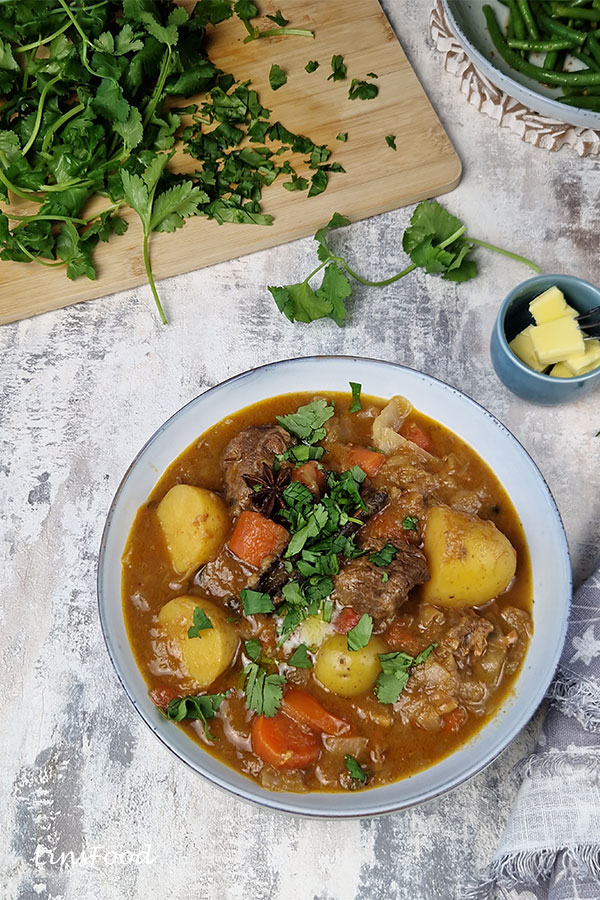
How to serve Eurasian Beef Smore?
With the potatoes, this Kristang beef stew is already a full meal, you definitely want more carbs to go with it. (Kristang refers to the local Eurasian community).
Serve it with:
- Rice – my children’s go-to – before they went vegetarian on me!
- Crusty bread (the non-negotiable option for dunking)
- Buttery mash (comfort on comfort, win-win)
- Yorkshire puddings (if you’re feeling bold and British about it)
- Something sharp on the side like pickles or a vinegary slaw (optional, but it cuts through the richness nicely)
- Sambal belacan – always!
In the old days (sounding like my father-in-law), this Eurasian beef stew would have been cooked with dumplings just like traditional European stews. So blobs of dough will be placed on top and will cook along and absorb some of the gravy, and served alongside the stew.
If you fancy that, drop me a comment and I’ll tell you how.
How to Store
Beef stew is a leftovers champion. It keeps 3 to 4 days in an airtight container. Let’s face it, like all stews and curries, it tastes better the next day because the flavours have had time to mingle. And no longer single? Sorry, couldn’t help myself.
Storage tips:
- Cool it quickly (don’t leave it sitting out for ages)
- Portion into containers
- Refrigerate promptly
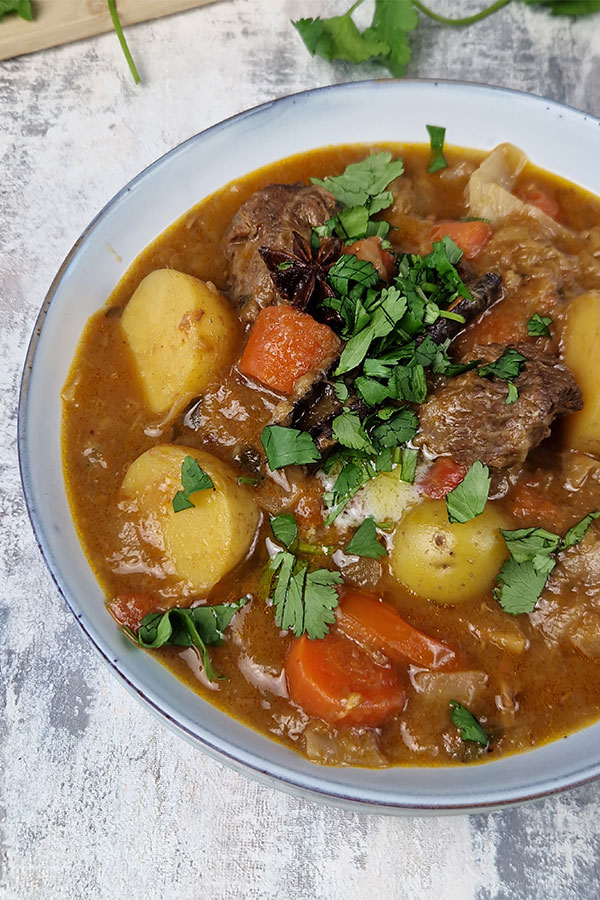
Can you Freeze Eurasian Beef Smore?
Yes, it freezes, but the potatoes and vegetables will get softer and the former, perhaps even a little grainy. But it will still taste amazing. Since I’m the only meat eater in the family now, I do it all the time.
You can store it for up to 3 months, but if truth be told, I prefer to do it no more than a month. This is because icicles start forming, no matter how well you’ve protected it.
Freeze it like this:
- Cool completely
- Portion into freezer-safe containers or bags (bags laid flat save space)
- Label it because you’re going to forget when you packed it, trust me
- Freeze promptly
Defrost and reheat:
- Defrost overnight in the fridge if you can, or just straight in the microwave
- Reheat gently on the hob until piping hot all the way through
- Add a splash of water if it’s thickened (it will)
Eurasian Beef Smore FAQ
It needs reduction. Simmer uncovered for 15-30 minutes to thicken and concentrate the flavour. You could also thin down 1 Tbsp of flour in a little water and stir it in. Cornflour also works.
Heat’s too high or there isn’t enough liquid. Turn it down, stir more often, and add a splash of liquid if needed.
It needs more time (not more heat). Keep it gently simmering until it becomes tender.
The cut was too lean, just simmer it longer.
The stew was boiled hard, again, simmer it longer.
Absolutely, it’s one of the best make-ahead meals. Make it today, eat it tomorrow, next week or next month. See above.
The beef should pull apart easily with a fork.
The sauce should be rich and savoury, not thin and watery.
The potatoes should be tender but not disintegrating.
There you go. One of my favourite comfort foods that ever lived, a Eurasian heritage recipe. Let me know what you think and if you have any questions, just ask.
If you make it, post a picture on Instagram if you use it and tag me @azlinbloor.
Lin xx
Eurasian Beef Smore (A Heritage Recipe)
Ingredients
- 500 g stewing beef diced to slightly bigger than bitesized pieces
- 2 Tbsp vegetable oil
- 1 Tbsp plain flour (all purpose)
- 1 litre half strength beef stock 1 litre water + 1 stockpot or stock cube
- 1 Tbsp sundried tomato paste
- salt if needed
Aromatics, Vegetables and Herbs
- 2 large onions
- 4 cloves garlic
- 7.5 cm ginger, julienned (in strips)
- 1 large carrot
- 1 celery
- 1 leek
- 200 g cabbage
- 2 tomatoes
- 4 medium potatoes
Spices
- 2 cloves
- 1 cinnamon stick
- 1 star anise
- ½ tsp black peppercorns
Marinade
- 1 Tbsp dark soy sauce
- 1 Tbsp kicap manis
- 1 Tbsp light soy sauce
- 2 tsp clear vinegar
- 1 Tbsp Dijon mustard
- generous amount of freshly ground black pepper
To Finish
- freshly ground black pepper
- a few stalks fresh coriander leaves (cilantro) chopped
- some salted butter
Instructions
Prep Work
- Marinade the beef with all the ingredients for at least 30 minutes.If you have time, do it for longer, even overnight. If you are keeping it overnight, cover and place in the fridge. The next day bring it our before you start chopping things up, to bring it to room temperature.500 g stewing beef, 1 Tbsp dark soy sauce, 1 Tbsp kicap manis, 1 Tbsp light soy sauce, 2 tsp clear vinegar, 1 Tbsp Dijon mustard, freshly ground black pepper
- Peel and quarter the onions. Peel and slice the ginger into matchsticks. Peel and slice the garlic widthwise. You can also finely chop or mince the garlic.2 large onions, 4 cloves garlic, 7.5 cm ginger, julienned (in strips)
- Cut the celery, leek and carrot into 2.5 cm (1") thickness.Quarter the potatoes, and thinly slice the cabbage.Quarter the tomatoes.1 large carrot, 1 celery, 1 leek, 2 tomatoes, 4 medium potatoes, 200 g cabbage
Let's get Cooking
- Heat the oil in a casserole dish or large saucepan on medium heat, and fry the cinnamon stick, star anise and cloves for 30 seconds.2 Tbsp vegetable oil, 2 cloves, 1 cinnamon stick, 1 star anise
- Add the onion and fry for 2 minutes, followed with the garlic and ginger, and frying for just 30 seconds.
- Add the beef, along with any marinade in the bowl and stir well to mix.
- Add the flour and stir thoroughly.1 Tbsp plain flour (all purpose)
- Tip in the carrot, celery and leek. Stir thoroughly to coat with meat juices.If you like your vegetables less cooked, add them with the potatoes, below.
- Now add the stock, sundried tomato paste and black peppercorns. Stir and bring to boil.1 litre half strength beef stock, 1 Tbsp sundried tomato paste, ½ tsp black peppercorns
- Cover and leave to simmer for 1 hour on the lowest heat.Check at the end of the hour to see if your beef is cooked. It should be just about done. If it's still pretty tough, cook it for another 30 minutes.
- Add the potatoes and cabbage, bring to boil and cook until the potatoes are done, about 30 minutes, by which time, the beef will be beautifully tender.
- Check seasoning and add salt if necessary. Tip in the tomatoes, stir and turn the heat off.salt
Serving
- Serve with lots of black pepper, a dollop of butter and the chopped coriander leaves (cilantro).generous amount of freshly ground black pepper, a few stalks fresh coriander leaves (cilantro), some salted butter
Nutrition
Enjoyed this recipe? Add us to your Google Search Preferred Sources:
Going to make this tomorrow, got family coming over. And I was pleasantly surprised to find that chuck is also called chuck in Singapore!
Let me know how it goes.