

Enjoyed this recipe? Add us to your Google Search Preferred Sources:
Singapore chilli crab pasta is a great midweek meal – quick and easy. It gives you the sweet-spicy, garlicky, tomatoey, glossy sauce, but without all that shell-cracking and flying shrapnel.
Estimated reading time: 9 minutes
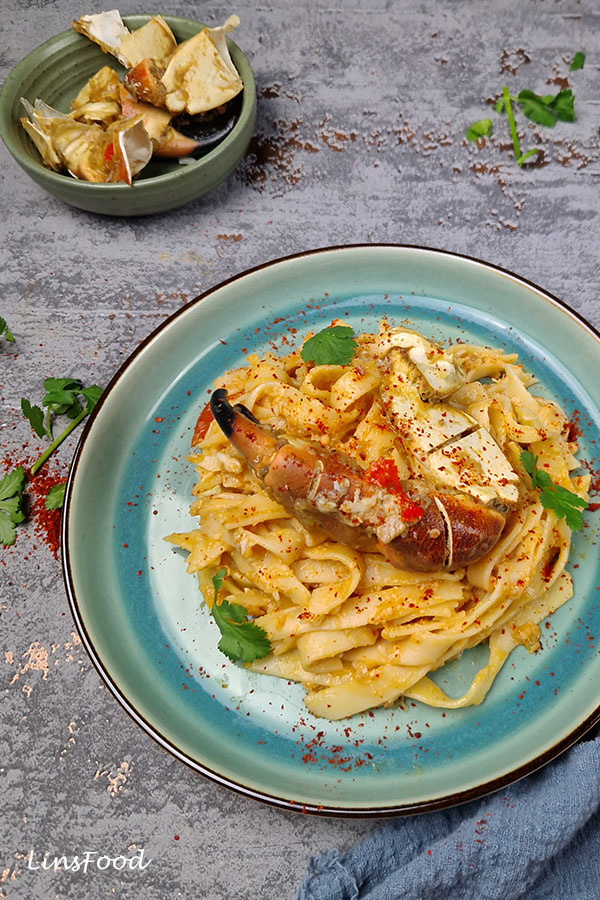
What is Singapore Chilli Crab?
Singapore chilli crab is one of Singapore’s most famous dishes: crab in a bold chilli crab sauce that’s sweet, savoury, tangy, and gently fiery, usually built on aromatics like garlic and ginger with tomato, chilli, and a glossy finish.
It’s messy, it’s addictive, and it’s the kind of flavour that clings to everything – which is exactly why it’s perfect for pasta.
You can read more about this iconic Singaporean recipe here, along with my recipe for Singapore Chilli Crab.
Being Singaporean, I’m a huge fan of the Singapore chilli crab. But I don’t always have the time to grapple with whole crabs before or after cooking. So some years ago, I thought Singapore chilli crab with canned crab? Or just fresh crab meat? Would it work?
You’ll be pleased to know yes, it worked really well. Sometimes, you just want the flavour, right? Then one day, I had some of the chilli crab left over and spaghetti in a saucepan next to it, and I thought, why not?
So this is me taking a favourite childhood recipe and giving it a weeknight-friendly format. The best bit? You can do it with fresh crab meat or canned crab meat. And any pasta.
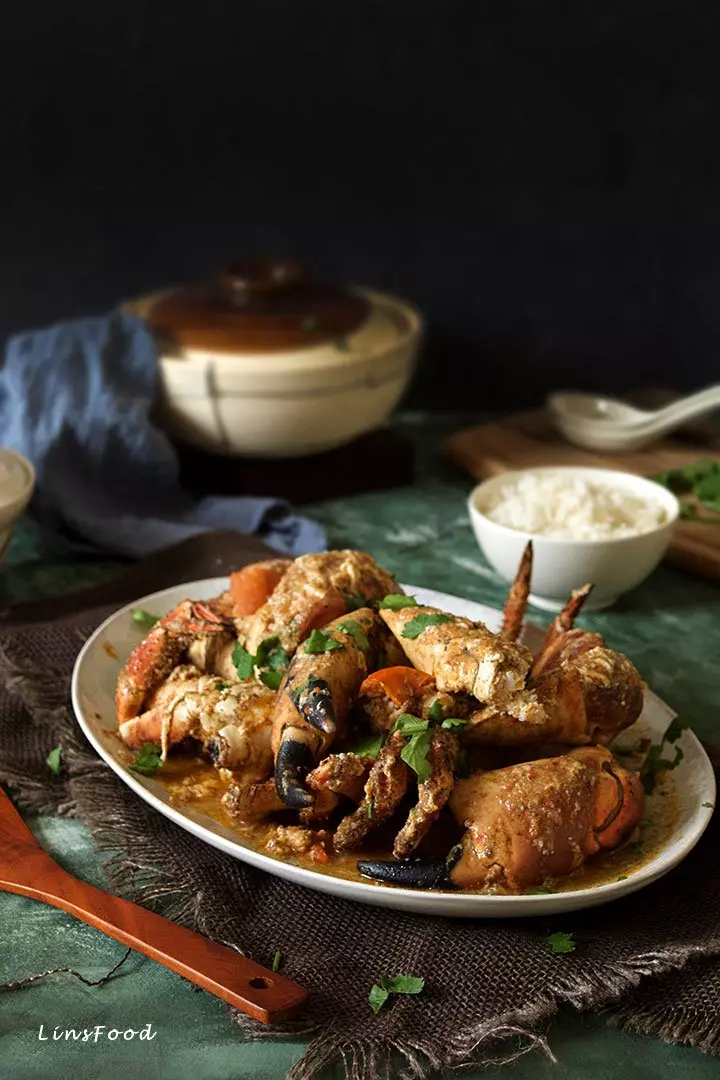
The Flavour
A proper Singapore chilli crab sauce is all about balance. You want it punchy but not particularly spicy. The goal is a sweet-spicy sauce with depth, not just heat for the sake of heat.
Done right, you have warm spice, mellow sweetness, tomato tang, and a savoury base that keeps it from tipping into “sweet ketchup pasta” territory.
Key notes you’re aiming for:
- Sweetness: the signature chilli crab sweetness (ketchup is the hero). The sweetness in our recipe is also provided by the sweet chilli sauce I’m adding and the crab meat, which would normally be within shells.
- Spice: I’m keeping the recipe here mildly hot, making our own spice paste, or rempah, as we’d call it in Malay. You can increase the number of chillies or use a hotter variety if you like to live on the wild side.
The Recipe
It’s straightforward and pretty and fast. I’ve pretty much stuck to my Singapore chilli crab recipe, with just a couple of changes. This is what we’ll be doing:
- If not using shop bought, we extract the tamarind juice from the pulp.
- Cook the pasta. Drain, reserving the liquid.
- While the pasta is cooking, make the spice paste by grinding or finely chopping the onion, garlic, ginger, red chillies and our “specialist” ingredient, taucheo (more below).
- Fry the paste for 5 minutes until the pecah minyak stage (explanation below). With no added water, that time should suffice.
- Add the crab claws if using, along with a few other ingredients. Simmer for 10 minutes.
- Add the crab meat, stir for 5 seconds, stir the beaten egg through for 10 seconds.
- Stir through the pasta and serve.
Told you it was easy.
What is Pecah Minyak
- Pecah = break
- Minyak = oil
When you fry a spice paste in Southeast Asian and South Asian cooking, you are aiming for the step when your spice paste loses much of its raw flavour and has taken on a darker colour.
In English, this is called oil splitting or oil separation. The paste loses its moisture, allowing the oil to surface, marking a clear separation between the oil and the paste. So, oil separation, or pecah minyak.
Post on this coming next!

Chilli Crab Pasta Ingredients
Let’s take a look at some of the ingredients.
Fresh crab meat vs canned crab meat
Fresh crab meat is total yum, but canned crab meat is convenient, much cheaper and completely usable for our Singapore chilli crab pasta.
In this recipe, the sauce is King. It does a lot of the talking, so your crab choice is more about budget and availibility.
With canned crab meat, ideally, you want to go for large chunks of crab meat which will be noticeable and will stand out, but whatever you can find will work as far as the flavour is concerned.
Here in the UK, the Kingfisher brand does 3 different types. At the time of cooking this recipe though, I could only get the shredded variety. So that’s what you see me using in the video.
Crab Claws – optional
I love to throw in some crab claws if I’d actually planned ahead (these days, not often, life seems to be 1 big chaos). That means I’d have them in the freezer.
Crab claws add depth and flavour to the sauce, just as if you were using fish stock in cooking any seafood recipe. But don’t do that here. Singapore chilli crab sauce is light and sublime; fish stock will ruin it.
When I’m cooking this on a whim and don’t have any crab claws, I just add half a Tbsp of fish sauce. So you can do that if you want.
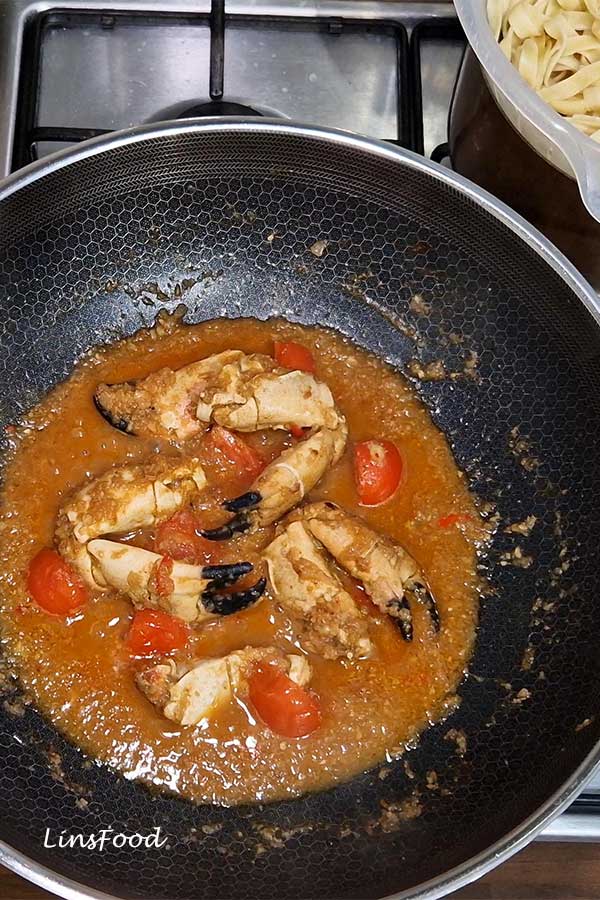
The Sauce
Remember I said the sauce does most of the talking? So pay attention.
These are the parts to it:
Spice paste (rempah) – made up of the usual onion, garlic, ginger and red chillies. Then we have a “specialist” ingredient called taucheo in the local lingo, which are salted, fermented soya beans. See below.
If you want, you could throw in a bruised lemongrass into the mix when frying the spice paste, for just a little bit more excitement. Not sure what bruised lemongrass means? Click here to read on how to prepare lemongrass, or ask me.
Tomato Ketchup – don’t scoff at this. The legend of the Singapore chilli crab was born because an enterprising chap decided to add ketchup to the crabs he and his wife were selling! It adds sweetness and tartness.
Sweet Chilli Sauce – when I first made this chilli crab pasta, I found the sauce a little wanting. The sweet chilli sauce seemed to complete the picture, although I don’t use it in the original recipe.
Tamarind – this is an indispensible ingredient in many cuisines, and certainly in Southeast Asia. Tamarind is so easily available these days in paste form.
In the recipe card below, I give you instructions on how to extract tamarind juice from the pulp, something I still do despite always having shop bought ready-made paste in the fridge. Click here to read more about tamarind and its substitutes.
Egg – we lightly swirl a beaten egg in the sauce when it’s all done for ribbons of beaten egg. This also thickens the sauce. See more below.
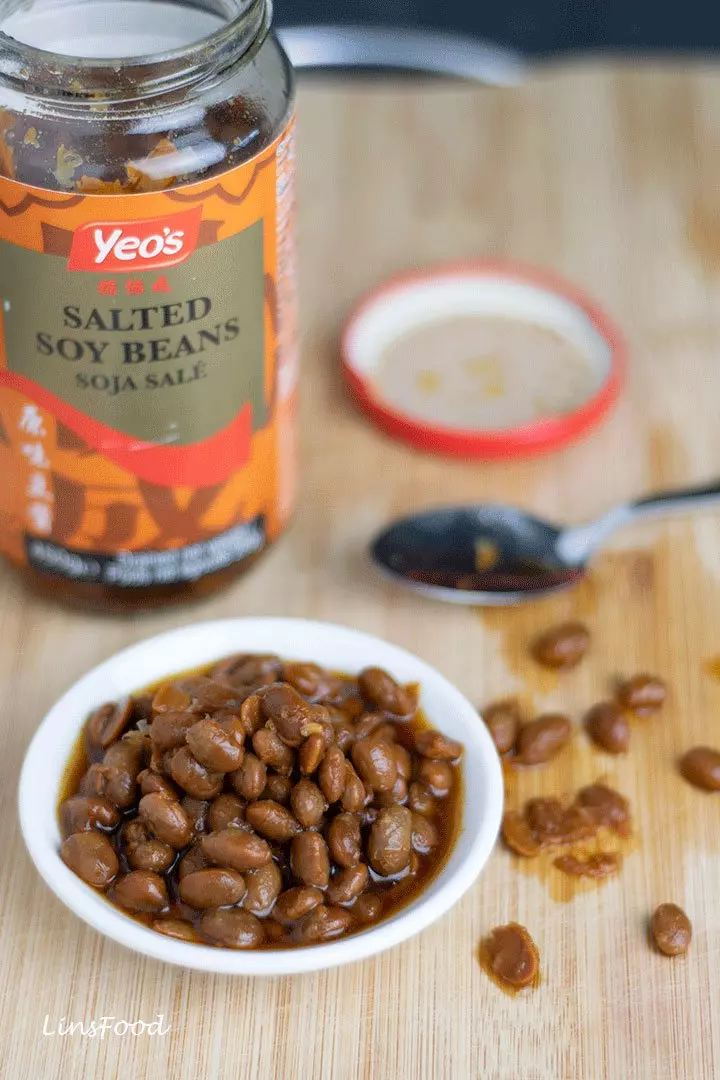
Taucheo for the Spice Paste
This is an abolute must. Taucheo adds a tangy, earthy and umami depth to your chilli crab pasta sauce. The one that I use from Yeo’s should be available at East Asian or Southeast Asian stores. Having said that, there are occasions when I can only get them online.
However, since taucheo is used throughout the region, you’ll also find it in various other forms, more often than not, already mashed up, unlike the whole bean version in Singapore and Malaysia.
For eg, the Korean version is called doenjang and can also be used. In the video you see me using the Thai version, also mashed up.
If you really can’t find taucheo, red miso paste makes a good substitute, as does hoisin sauce although the latter is a little sweet.
And since this is a chilli recipe, you could also get away with the Chinese chilli bean paste.
Chilli Crab Pasta Sauce
Chilli crab sauce is meant to cling. If your sauce is watery, it’ll taste fine but it won’t feel like chilli crab. That glossy, slightly thick texture is part of the charm.
There are two common ways to get the texture right:
- A light cornflour (cornstarch) slurry: easy, stable, very effective – I use this half the time as 2 of my kids have an egg allergy
- The egg-ribbon method: more traditional to chilli crab, gives a silky thickness if you do it gently
Either way, the sauce should coat the back of a spoon and then coat your pasta properly. That’s the whole point.
How Spicy should Singapore Chilli Crab Pasta be?
Traditional Singapore chilli crab is only lightly spicy. The heat is meant to play with the sweetness, not bulldoze it. And that’s what I’ve gone for here. However, that’s not to say that you can’t throw in a habanero if you want a spicy pasta dish.
So you do you, spicy or not, your choice.
Best Pasta Shape?
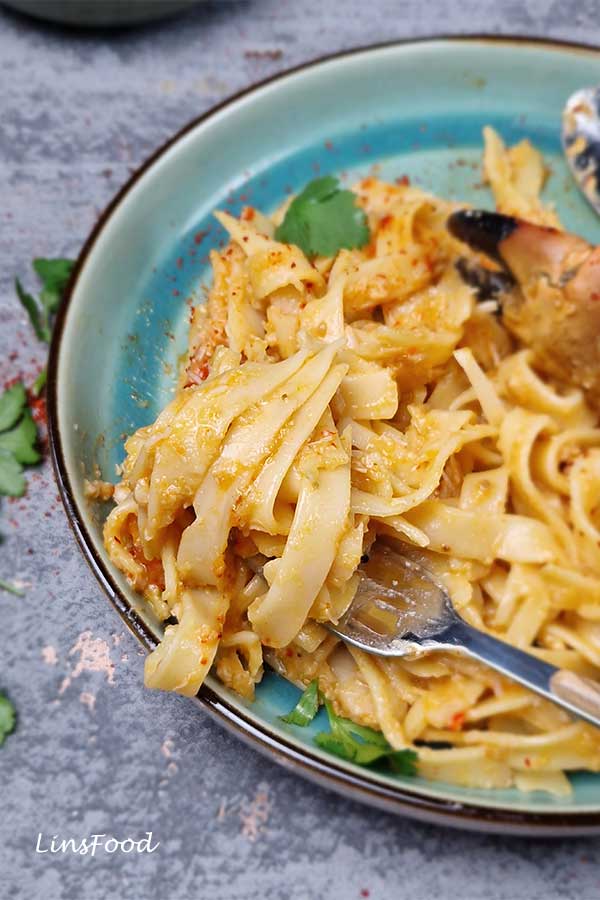
Long noodles are the classics here because they carry sauce beautifully: spaghetti, linguine, or even fettuccine. I love using tagliatelle for its bigger surface area for the sauce to cling to.
But if you’ve got penne or rigatoni, they’ll trap sauce in all the right places too.
If you want the most “Singapore chilli crab pasta” look and feel, go with tagliatelle or linguine.
Variations, if you must
Once you’ve got the chilli crab sauce profile down, you can riff without losing the plot. Tune?
- Add prawns: Singapore chilli crab pasta meets seafood pasta, and nobody’s upset
- Add brown crab meat/roe (if you have it): deeper and richer
- Add a fried egg on top: not traditional, but why not?
- Use noodles instead of pasta: udon or even mee-style noodles love this sauce
- Add a little coconut milk: not classic chilli crab, but it turns it creamy and lush
How to store and reheat chilli crab pasta
Singapore chilli crab pasta is best eaten fresh because pasta keeps drinking sauce like it’s on a mission. But leftovers are still very good if you reheat properly.
Fridge:
- Store in an airtight container overnight.
Reheat:
- Reheat gently in a pan with a splash of water or stock. Low heat, slow toss.
- Microwave works, but use short bursts and stir in between so the crab doesn’t turn rubbery.
And there you go, quick, easy Singapore Chilli Crab pasta. Tagliatelle or linguine are great, but any pasta works just as well.
Let me know if you make it or if you have any questions. Post a picture on Instagram and tag me @azlinbloor as usual.
Lin xx
Singapore Chilli Crab Pasta Recipe
Ingredients
- 2 Tbsp tamarind pulp or shop bought paste
- 4 Tbsp water for the tamarind
- 300 g tagliatelle or any pasta
- 1 large pot of water + 1 tsp salt
- 2 Tbsp vegetable oil
- 2 tomatoes
- 3 Tbsp tomato ketchup
- 3 Tbsp chilli sauce sweet
- ½ tsp salt only if needed
- 250 ml pasta water
- 4 crab claws optional
- 1 egg lightly beaten
- 400 g crab meat read article
- 2 Tbsp chopped chives or 1 spring onion (scallion), optional
- chilli flakes optional
Grind to a Paste
- 1 medium onion
- 3 red chillies
- 3 cloves garlic
- 5 cm fresh ginger
- 2 Tbsp taucheo soybean paste, read article above for substitutes
Instructions
Soak Tamarind Pulp
- Soak the tamarind pulp in the water for 10 minutes. The hotter the water, the less time you need.If you're using shop bought paste, skip this obviously.2 Tbsp tamarind pulp, 4 Tbsp water
- After the soaking time, give it all good mix, squeezing the pulp with your fingers, then strain through a medium or large mesh sieve. Discard the seeds and pulp.
Cook the Pasta
- Bring a large pan of water with 1 tsp salt to a boil. Cook the tagliatelle according to packet instructions, usually about 8 – 10 minutes until al dente (just cooked).300 g tagliatelle, 1 large pot of water + 1 tsp salt
- Strain when the pasta is done, reserving about 250 ml (1 cup) of the water.Leave the tagliatelle over the pot in the colander.
Prep Work (while pasta is cooking)
- Peel and quarter the onions, peel the garlic and ginger.1 medium onion, 3 cloves garlic, 5 cm fresh ginger
- Add to a food chopper, along with the chillies and taucheo and blitz to a fine paste.3 red chillies, 2 Tbsp taucheo
- Quarter the tomatoes.2 tomatoes
Let's Get Cooking
- Heat the oil in a large wok and fry the paste ingredients for 5 minutes until fragrant and it reaches the pecah minyak stage. You shouldn't need too long given that our paste doesn't have any added water.Read about pecah minyak in the article.2 Tbsp vegetable oil
- Add the tomatoes, half the pasta water, ketchup, chilli sauce, tamarind, and crab claws and give it all a good stir.Cover and cook for 8-10 minutes until the crabs are done. Large ones will need 10 minutes, if they're small, they'll be done at 8. If you're not sure, go for the whole 10 minutes.3 Tbsp tomato ketchup, 3 Tbsp chilli sauce sweet, 250 ml pasta water, 4 crab claws
- Taste and add salt if needed. If the sauce is a little to dry for your liking, add more water and again check the seasoning. You want sweet and slightly spicy.½ tsp salt
- Tip in the crab meat, stir for 10 seconds, then add the egg and gently swirl it in for 10 seconds. The egg doesn’t want very long as you want wisps of it, not scrambled bits.1 egg lightly beaten, 400 g crab meat
- Add the pasta and stir well to mix and to heat right through.Serve hot, topped with chives or chilli flakes if you fancy.chilli flakes, 2 Tbsp chopped chives
Nutrition
Enjoyed this recipe? Add us to your Google Search Preferred Sources:
Perfect! Speaking as a Singaporean!
Much obliged!