

Enjoyed this recipe? Add us to your Google Search Preferred Sources:
Sambal cincalok is one of the quickest, sharpest ways to use cincalok – salty, tangy, shrimpy, bright with lime, and excellent with rice, fried fish and other simple savoury dishes. It’s a small thing, but it can wake up a whole meal. The classic version is commonly served with chillies, shallots and lime juice, especially in Malacca.
Estimated reading time: 7 minutes
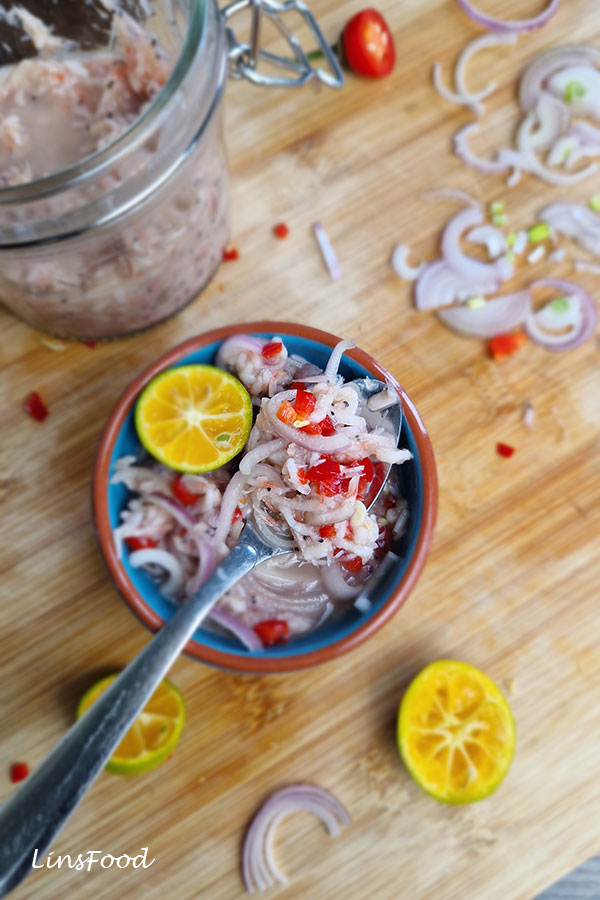
What Is Sambal Cincalok?
Sambal cincalok is a simple relish made by mixing cincalok (fermented shrimps) with sliced shallots or onion, chilli and citrus juice. It’s fresh, sharp and punchy.
This one comes together in minutes. The cincalok brings salt, tang, umami and that unmistakable fermented shrimp depth, the shallots soften its edges, the chilli adds heat, and the calamondin lime lifts the whole thing. Small condiment, big personality.
If you’re new to cincalok, think of this as one of the best beginner uses. It shows you exactly what the ingredient does, without too much else getting in the way.
I’ve also got ayam cincalok recipe on this site, for another way to use this fermented shrimp.
Origins
Cincalok (pronounced chin – cha – loke) is most closely associated with Malacca (Melaka in Malay), and sambal cincalok is one of the most familiar and natural ways to serve it. It sits comfortably in the food culture of the Straits, especially in Peranakan and Kristang or Eurasian kitchens, where sharp, salty condiments like this make perfect sense beside rice, fish and all sorts of everyday dishes.
This is also why sambal cincalok feels bigger than its ingredient list suggests. It may be a quick relish, but it carries more than shrimp and salt in it – it carries the old trade routes of the Straits, and the mixed food culture and restless history that grew around them.
You do find fermented shrimp condiments across Asia, and cincalok has cousins in Indonesia, the Philippines, Thailand and Korea. But sambal cincalok belongs very much to this corner of the world – the Straits, Melaka, Singapore, and the layered kitchen life that runs through them.
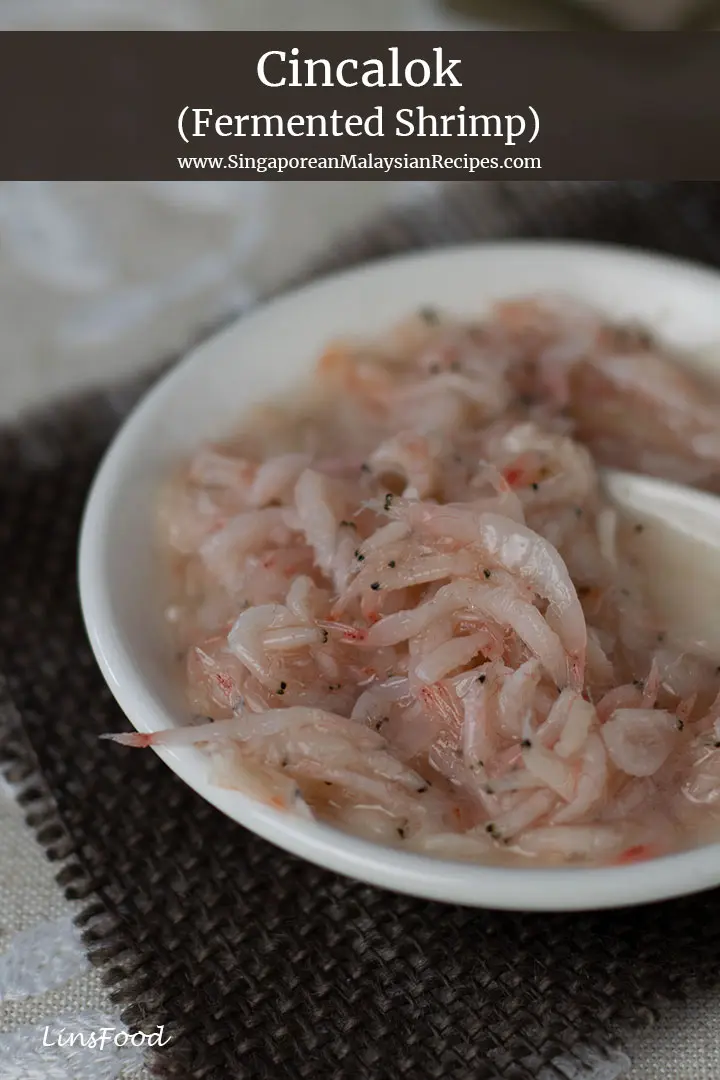
Sambal Cincalok Recipe
Sambal cincalok is one of those recipes that is more about balance than effort. You are not cooking anything here, just bringing a few strong ingredients into line so they work together instead of shouting over each other.
Start by mixing the cincalok with thinly sliced shallots, chilli and calamondin lime juice. I also add a very small pinch of sugar to soften the edges slightly. Then leave it for a few minutes so the shallots mellow, the chilli settles in, and the whole thing tastes more joined up.
This is best made shortly before serving, while everything still feels bright and fresh. And go easy at first – cincalok doesn’t need much help making itself known.
Ingredients
- cincalok
- shallots
- red chilli
- calamondin lime juice (or rgular lime)
- sugar
Shallots are the nicer fit here, with a gentler sweetness and a softer bite, but red onion works perfectly well if that is what you have, or prefer. How to mellow red onions? Soack them in ice water for 20 – 30 minutes. Or even 5 minutes if you’re impatient.
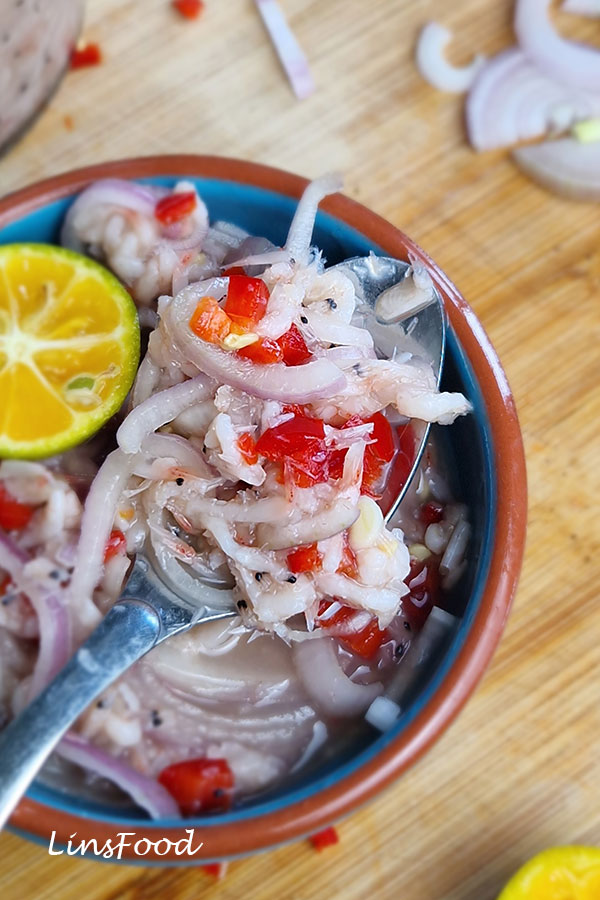
Cincalok Substitute
To me, Korean saeujeot makes a very good, almost perfect, substitute for cincalok. It has that same salty, briny, fermented shrimp character, and it behaves far more like cincalok than a dense shrimp paste such as belacan ever will.
So if you can’t get cincalok, saeujeot is the first thing I’d reach for. Other fermented shrimp products can also work, but it all depends on how they were made. Take the Filipino Bagoong Alamang, for example.
Check the ingredients. If you see just krill, salt, water and perhaps sugar, then that’s perfect. But if you start to see other ingredients like garlic, ginger, vinegar, and so on, then you could use it, but it won’t be a perfect substitute for cincalok.
Whatever substitute you use, start with less than you think you need and adjust from there. With ingredients like these, it is always easier to add more than to rescue a dish that’s gone too far.
How to Serve
Sambal cincalok is lovely with hot rice and fried fish, which is probably the most obvious and satisfying place to start. It is also excellent with grilled seafood, omelettes, plain vegetables and other simple savoury dishes that need a little sharpness on the side.
That contrast is the whole point. Sambal cincalok works best beside foods that are rich, mild, oily or otherwise in need of brightening up. A spoonful can do a surprising amount of heavy lifting.
It also makes a good side condiment for meals that are a bit bland and need rescuing. We’ve all been there.

How to Store Leftovers
Sambal cincalok is best eaten fresh, on the day you make it. That is when the shallots still have bite, the chilli still feels lively, and the lime still tastes bright.
If you do have any left over keep it in a covered container in the fridge and use within two days. Give it a stir before serving, and taste to see whether it needs another squeeze of lime to wake it back up.
The cincalok itself should be stored according to the jar label, but once opened it is usually best kept in the fridge and always handled with a clean spoon.
Variations
You can use red onion instead of shallots if that is what you have. Shallots are the nicer fit, but red onion works perfectly well. See above.
Use bird’s eye chillies if you want more heat, or stick with milder red chillies if you want warmth without quite so much drama. Daredevil? Use your favourite superhot chillies.
If you don’t have calamondin limes, regular lime is absolutely fine.
For a rougher, more old-school texture, you can lightly crush the shallots and chilli before mixing them in rather than simply slicing them.
Sambal Cincalok FAQs
Sambal cincalok is usually made with cincalok, shallots or onion, chillies and lime juice. Some versions also include a pinch of sugar to round out the flavour. Classic Melaka descriptions specifically mention chillies, shallots and lime juice.
It is salty, shrimpy, tangy, lightly sour and spicy, with plenty of savoury depth from the fermented shrimp.
Not usually. This easy sambal cincalok recipe is a fresh, uncooked condiment mixed just before serving.
It is especially good with hot rice, fried fish, grilled seafood, vegetables and omelettes.
Yes. Shallots are more traditional and a little gentler, but red onion works perfectly well.
No. Both are sambals with a fermented seafood backbone, but sambal cincalok uses cincalok, which is wetter and looser, while sambal belacan uses belacan, which is firmer and more concentrated.
Yes. Calamondin lime is lovely here, but regular lime is absolutely fine.
It is best on the day it is made, but leftovers can be refrigerated and used within a day or two.
Sambal cincalok may be small, but it does a lot. Sharp, salty, lively and full of character, it’s the sort of condiment that can turn a plain plate of rice and fish into something far more interesting.
And if you’re new to cincalok, this is one of the best ways to start – simple, quick, and straight to the point.
Look out for my full cincalok article next, where I’ll get into more depth and how to make it at home.
If you make it, take a pic and share it on Instagram and tage me @azlinbloor.
Lin xx
Sambal Cincalok Recipe
Ingredients
- 3 Tbsp cincalok
- 2 shallots
- 1 red chilli
- 2 tsp calamondin lime juice or regular lime juice
- 1 small pinch sugar
Instructions
- Peel, then slice the shallots thinly.Finely chop the chillies.2 shallots, 1 red chilli
- Place the cincalok in a small bowl, then add all the other ingredients in and mix well.3 Tbsp cincalok, 2 tsp calamondin lime juice , 1 small pinch sugar
- Leave for 5 minutes for the flavours to settle together.Then taste, and add more lime juice if needed.Serve as suggested above.
Nutrition
Enjoyed this recipe? Add us to your Google Search Preferred Sources: