

Enjoyed this recipe? Add us to your Google Search Preferred Sources:
This homemade petis udang recipe turns prawn heads and shells into a dark, glossy and deeply savoury-sweet paste. Also known as just petis, hae ko or hei ko, it’s used in asam laksa, rojak, dipping sauces and many Indonesian, Malaysian and Singaporean dishes.
Estimated reading time: 15 minutes
Table of contents
- What is Petis Udang?
- What Does Petis Udang Taste Like?
- Petis Udang, Petis and Hae Ko
- Where did it Come From?
- Is Petis Udang the Same as Belacan?
- Why Make Petis Udang at Home?
- Homemade Petis Udang Recipe
- Recipe Notes
- Why Is There No Butter or Oil?
- Ingredients
- Storage
- Buying Petis Udang
- How to Use Petis Udang
- What Can I Substitute for Petis Udang?
- Frequently Asked Questions
- Final Word
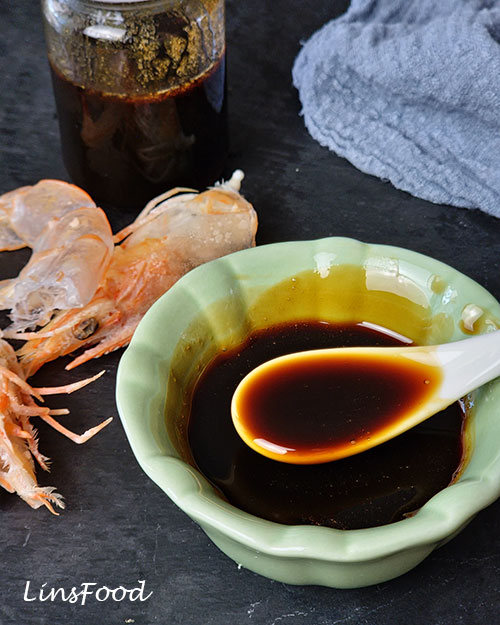
What is Petis Udang?
Petis udang is a thick, dark condiment made by concentrating prawn or shrimp extract with sugar and salt. Flour or starch may also be added to produce its characteristically smooth and sticky consistency.
The finished paste is usually dark brown or almost black, with a texture somewhere between thick treacle and a very soft paste. It’s intensely prawny, savoury and slightly sweet, and only a small amount is usually needed.
The word udang means prawn or shrimp in Malay and Indonesian. Petis can also be made from fish or other shellfish, but petis udang specifically refers to the prawn version (udang is prawns/shrimp in Malay).
Unlike belacan and terasi, petis udang isn’t primarily produced by fermenting salted prawns. We extract flavour from the shells and heads instead.
What Does Petis Udang Taste Like?
Petis udang has a deep seafood flavour with plenty of savoury umami, sweetness, salt and a slightly caramelised finish.
The flavour varies from one producer to another. Some petis is highly savoury and salty, while the type commonly used in Singaporean and Malaysian rojak and asam laksa tends to be sweeter, smoother and more treacle-like.
A good petis udang should taste strongly of prawns without being stale, harsh or unpleasantly fishy. The sweetness shouldn’t smother the seafood flavour either.
Petis Udang, Petis and Hae Ko
In Singapore and Malaysia, petis udang is also commonly called petis, hae ko, hei ko, hae kor or heh ko.
Hae ko is the Hokkien name, and as usual, English spellings vary because well, pronunciations don’t always transliterate neatly.
Petis udang is the Malay name, and it’s often shortened simply to petis in everyday conversation and on product labels.
In the Singaporean and Malaysian context, these names generally refer to the same dark, thick and savoury-sweet prawn paste used with dishes such as rojak and asam laksa. A product may be labelled petis udang in one shop and hae ko in another without being a fundamentally different condiment.
As with most traditional products, the exact recipe, sweetness and consistency vary between regions and manufacturers. Some brands are almost pourable, while others require a spoon and a little patience.
Over the years, quite a few readers have asked me over the years what the best substitute for petis udang is. I thought I’d do one better: forget the substitute and make the real thing from scratch, using prawn heads and shells that might otherwise end up in the bin.
Where did it Come From?
There doesn’t seem to be one neat origin story for petis udang, but it most likely developed as a practical way of using the deeply flavoured liquid left from cooking or processing prawns and other seafood, reducing it with sugar and salt into a concentrated paste.
Petis has especially strong ties to East Java, including Surabaya and Sidoarjo, where it’s used in dishes such as rujak cingur, tahu petis, lontong kupang and sambal petis. In Indonesia, petis can also be made from fish or other shellfish, while in Singapore and Malaysia, petis udang, petis and hae ko usually refer to the dark, smooth prawn paste we know from asam laksa, rojak and dipping sauces.
Recipes and sweetness vary from place to place, but they’re all part of the same wider Southeast Asian tradition of concentrating seafood flavour.
Is Petis Udang the Same as Belacan?
No. They both involve prawns, but producers make them differently, they taste completely different and cooks use them in different ways.
The reason people get confused is largely down to English labelling. Petis udang is often described as shrimp paste or prawn paste, even though those terms are also widely used for fermented products such as belacan, terasi and kapi. Shrimp cooking sauce would probably be a more useful English description for petis udang, as it reflects its smooth, sauce-like consistency and helps distinguish it from fermented shrimp paste.
We make petis udang by concentrating prawn extract or prawn cooking liquid with sugar and salt until it turns dark, smooth and sticky. Belacan is made from salted small prawns that are fermented, dried and pressed into a firm block or paste.
Belacan isn’t a substitute for petis udang. It won’t provide the sweetness, smooth body, sticky texture or cooked-prawn flavour required, and adding sugar to belacan won’t turn it into petis. They are two entirely different ingredients that happen to begin with prawns. See below for hae ko substitute ideas.

Why Make Petis Udang at Home?
I never made petis udang while I was living in Singapore, because why would you, right? I only began making it after moving to the UK in the 1990s, because I couldn’t find it easily.
This is often what moving abroad does to you. Ingredients you once bought without a second thought suddenly become delicious projects. Mind you, this was way back in th 90s.
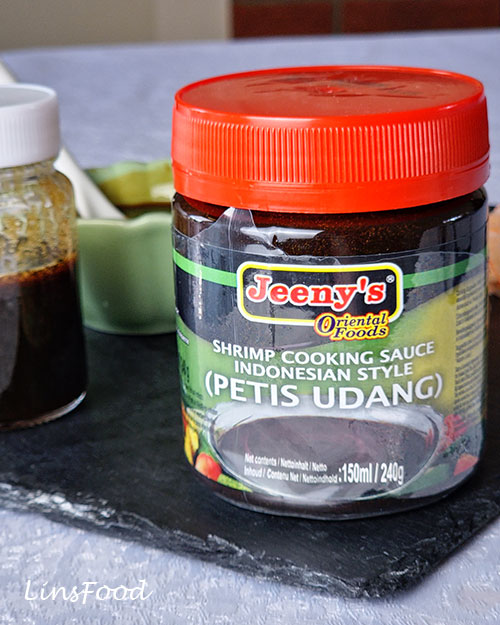
These days, petis udang is much easier to find in the UK. More often than not, I use Jeeny’s, which is available from Asian supermarkets and online shops. It’s convenient, reliable and already waiting in the jar when the need for asam laksa arises.
This homemade recipe is for all of you who’ve written to me asking what you can substitute for petis udang or how to make it from scratch.
It’s also a very fab way to use prawn heads and shells that might otherwise be thrown away. Homemade petis has a fresher prawn flavour, and you can control the sweetness, salt and final consistency.
Homemade Petis Udang Recipe
Petis udang is very easy to make. All right, let’s take that back: it’s easy once you have a pile of cleaned prawn shells and heads.
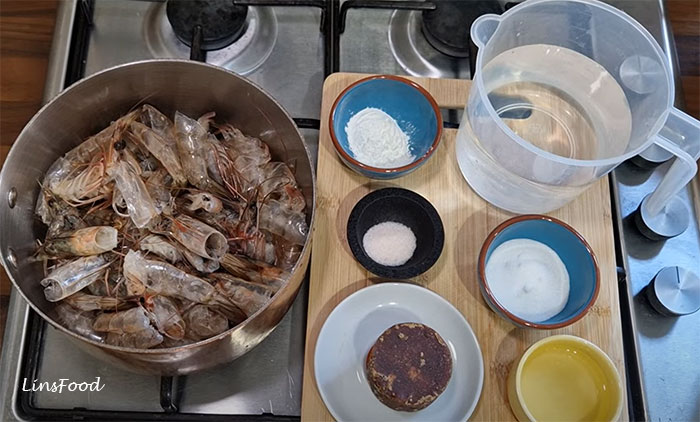
The recipe contains prawn heads and shells, water, palm sugar, a little white sugar, salt and cornflour.
Peeling the prawns is the part you may hate, but needs must. Unless, of course, you have a friendly fishmonger who’ll sell you the shells and heads. Cleaned or not, make him an offer.
We don’t use any fat (whether butter or oil), seasoning powder or long list of aromatics. Frying the shells first can create a darker, roasted flavour, but I want a clean and concentrated prawn taste here rather than something closer to a bisque.
We simmer the shells briefly, blend them to expose more surface area, then cook them for another five minutes before straining; this keeps the longer reduction shell-free and helps prevent bitterness or muddiness.
After that, it’s simply a case of heating the shells, giving everything a quick zap in the blender, simmering, straining, reducing, sweetening, thickening, cooling and storing. The messy work is all at the beginning; the rest is mostly the saucepan getting on with it.
Recipe Notes
The finished petis should look like loose black treacle while it is still hot. It will become considerably thicker as it cools, so don’t wait for it to reach the consistency of cold bottled petis while it’s still in the saucepan.
If the petis becomes too thick, warm it gently with a teaspoon or two of hot water.
If it is too thin once cool, return it to the saucepan and simmer for a few more minutes, or add a little more cornflour slurry. Or you know what, use it as is, as long as you’re happy with the flavour.
You can also, if you have the patience and more shells) leave out the cornflour and continue reducing the sauce naturally. Use low heat and stir frequently once it begins to thicken, as the sugar can catch easily.
Commercial petis often contains flour or another thickener, so adding a small amount of starch isn’t unusual.
Why Is There No Butter or Oil?
Some homemade petis udang recipes add butter, presumably for richness and a smoother finish. I don’t think it earns its place here. Petis udang should taste deeply and unmistakably of prawns, and butter softens that clean seafood flavour while adding a richness the sauce doesn’t need.
The prawn heads already provide plenty of natural body, while the sugar and cornflour give the finished petis its gloss and thickness. Keeping fat out gives us a cleaner, sharper petis that works far better in asam laksa, rojak and dipping sauces.
Ingredients
The full quantities are in the recipe card below, but these are the key ingredients.
Prawn heads and shells
Use the heads and shells from fresh raw prawns. The heads provide particularly good flavour, richness and colour, so include them whenever possible.
Give them a quick rinse to remove any obvious debris, but don’t soak them. Prolonged washing will rinse away some of the flavour we’re trying to extract.
Water
Six hundred millilitres is enough for 300g of heads and shells. It provides enough liquid for simmering and blending without leaving you with a watery stock that takes all afternoon to reduce.
Palm sugar
Gula Melaka, gula Jawa or another dark palm sugar gives the petis sweetness and a light caramel depth.
Palm sugars vary in sweetness, so taste the sauce before adding more white sugar.
White sugar
A little white sugar rounds out the flavour without adding more molasses notes.
Salt
Salt sharpens the prawn flavour and balances the sweetness. This homemade version contains less salt than many commercial products, so it must be refrigerated or frozen.
Cornflour
Cornflour helps create the smooth, glossy consistency associated with petis udang without requiring a very large amount of sugar or an excessively long reduction.
It’s optional. You can reduce the strained stock naturally instead, but you’ll need to watch it carefully as it thickens.
Storage
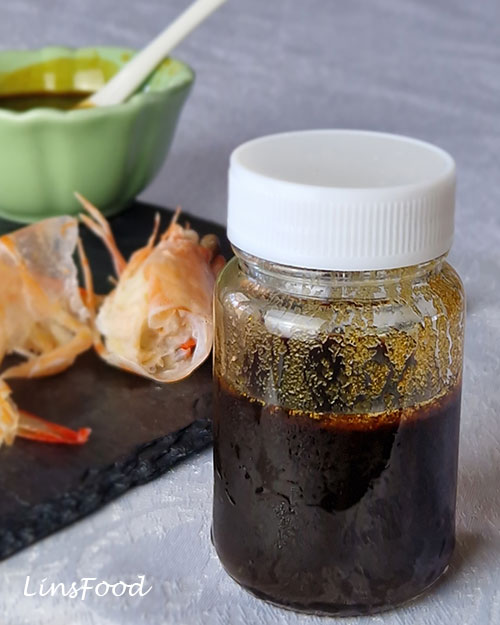
This homemade petis udang hasn’t been commercially preserved or tested for shelf stability.
Cool it promptly and transfer it to a clean, covered container.
Keep it in the refrigerator and use it within 48 hours. Freeze anything you won’t use within that time.
For convenient portions, spoon the petis into an ice-cube tray or small silicone mould. Once frozen, transfer the portions to a labelled freezer bag or container.
Use the frozen petis within three months for the best flavour.
Defrost only the amount you need in the refrigerator, or add a frozen portion directly to a hot soup or sauce.
Commercial petis udang should be stored according to the instructions on the jar.
Buying Petis Udang
Petis udang is available from Indonesian, Malaysian and larger Southeast Asian and East Asian supermarkets, as well as online Asian food shops. I can sometimes find it in my local Korean and Thai, but more often than not, online is still the only way.
It may be labelled as:
- Petis udang
- Petis
- Hae ko
- Hei ko
- Hae kor
- Otak udang
- Shrimp cooking sauce
- Sweet prawn paste
You’ll usually find it near Indonesian condiments, shrimp pastes, rojak ingredients or laksa products.
Read the ingredients carefully, especially if you need a gluten-free product. Many commercial brands use wheat flour to thicken the sauce.
Jeeny’s petis udang, for example, contains water, wheat flour, sugar, shrimp, glucose syrup and salt. It has a thick, smooth texture and a savoury, slightly sweet prawn flavour.
Take care not to buy belacan, terasi or a Chinese fermented shrimp paste by mistake. English product descriptions have a habit of calling everything involving prawns “shrimp paste”, which isn’t especially helpful.
How to Use Petis Udang
Petis udang is concentrated, so begin with a small quantity and add more after tasting. I’ll get you a few recipes in the next few weeks, bear with me.
- Add ½-1 teaspoon to each bowl of asam laksa, either directly on top or loosened with a little hot broth.
- Use it as the base of Chinese rojak sauce with tamarind, lime, sugar, chilli and ginger flower.
- Mix it with chillies, garlic, sugar and water to make sambal petis.
- Serve sambal petis with fried tofu, vegetables, rice cakes and savoury snacks.
- Stir a small amount into noodle sauces and stir-fries.
- Add it to seafood soups and broths for extra depth.
- Mix it into marinades for prawns, fish, meat or tofu.
- Loosen it with lime juice, tamarind water or hot water to make a dipping sauce.
- Add a little to popiah sauce for extra prawn flavour.
- Use it with chee cheong fun, depending on the regional style and your preference.
Petis udang contains both salt and sugar, so taste the dish before adding more of either.
What Can I Substitute for Petis Udang?
There is no exact substitute, particularly in rojak, where petis is responsible for much of the sauce’s flavour, colour and texture.
For every 1 Tbsp petis udang, try mixing:
- 2 tsp oyster sauce
- 1 tsp fish sauce
- ½-1 tsp dark palm sugar, dark brown sugar or molasses
This gives you sweetness, seafood umami, salt and some body. It won’t taste exactly like petis udang, but it works reasonably well in asam laksa, marinades and cooked sauces.
For a shellfish-free alternative, mix mushroom stir-fry sauce with a little soy sauce and dark brown sugar. This will provide savouriness and sweetness, but naturally, it won’t have the prawn flavour.
Belacan shouldn’t be used in equal quantities. If it’s all you have, use a very small amount, dissolve it thoroughly and add sugar separately.
Frequently Asked Questions
No. Petis udang isn’t fermented. It’s made by concentrating prawn extract or cooking liquid with sugar and salt until thick, unlike belacan and terasi, which are fermented shrimp pastes.
Yes. In Singapore and Malaysia, hae ko or hei ko is the Hokkien name commonly used for petis udang.
The condiment may also be called simply petis.
The exact sweetness and consistency vary between brands, but these names generally refer to the same dark prawn paste in the SG/MY context.
No, it’s not. English labels often call petis udang shrimp paste or prawn paste, but shrimp cooking sauce is arguably more helpful because it distinguishes petis from fermented shrimp pastes such as belacan and terasi.
Petis is dark, smooth, thick and usually sweet. Belacan and terasi are salty, fermented shrimp pastes with firmer, drier textures.
No. Fermentation gives belacan a much saltier flavour, and it completely lacks the sweet, smooth, sticky character of petis udang, so it doesn’t make a suitable substitute; see the article for better petis udang substitute ideas.
Yes, although the flavour will be lighter.
Use body shells and tails and reduce the strained stock a little further. Prawn heads provide more flavour, colour and richness.
Blending breaks the shells into smaller pieces and exposes more surface area, so they release more flavour during the short simmer; then strain out the crushed shells before reducing the sauce.
Prolonged cooking can make prawn-shell stock taste bitter, muddy or excessively iodine-like.
Once you blend the shells, they release their flavour very quickly, so strain them out before you begin the longer reduction.
No. Frying creates a darker, more roasted and bisque-like flavour. To keep the prawn flavour clean and concentrated, we simmer the shells directly in water rather than frying them first.
No. You can use cooked prawn shells to make a light prawn or seafood stock, but they won’t work well here because petis udang needs the full, rich flavour of raw prawn heads and shells.
You may have cooked the shells for too long, let the sauce catch on the base of the pan or caramelised the sugar too far.
Keep the shell simmer brief and reduce the strained liquid over gentle heat.
Continue simmering it over low heat or add a little more cornflour slurry.
Check the consistency after a spoonful has cooled, as the hot sauce will always appear thinner.
You thickened it for too long or used too much thickener. Easy solution.
Warm it gently with a small amount of hot water until it reaches the consistency you want.
This recipe can be gluten-free because it uses cornflour rather than wheat flour.
Check that the cornflour and other packaged ingredients are certified gluten-free when cooking for someone with coeliac disease or a serious intolerance.
Many commercial petis products contain wheat flour, so always read the label.
No. Petis udang contains concentrated prawn extract and is unsuitable for anyone with a crustacean or shellfish allergy.
Final Word
And there you have it, homemade petis udang, petis or hae ko, made from the prawn heads and shells that might otherwise have gone straight into the bin.
I still buy Jeeny’s more often than not because it’s convenient, dependable and these days mercifully easy to find. But when you have a good pile of fresh prawn shells, making your own gives you a beautifully concentrated condiment with a cleaner prawn flavour and complete control over the sweetness and salt.
This one is for all of you who’ve asked what to use instead of petis udang or whether it can be made at home. Yes, it can. Save those shells.
Make it, let me know what you think, and tag me on Instagram @azlinbloor with a picture.
More soon,
Lin xx
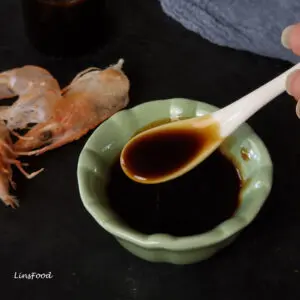
Homemade Petis Udang Recipe (Hae Ko)
Ingredients
- 300 g raw prawn heads and shells (from approximately 550–600g whole raw tiger prawns) see Notes below
- 600 ml water
- 100 g gula Melaka chopped or grated, see Notes
- 20 g white sugar plus more to taste
- ¾ tsp fine salt plus more to taste
- 1 Tbsp cornflour
- 4 Tbsp cold water
Instructions
- Place a saucer in your freezer, to test the consistency of the petis when done.
- Give the prawn heads and shells a quick rinse under cold water, then drain well.300 g raw prawn heads and shells
- Place them in a medium saucepan with the 600ml water. Bring to a strong simmer, then lower the heat and simmer gently for 10 minutes.600 ml water
- Remove from the heat and leave to cool until safe to blend. 10 minutes will do but ensure that your blender can take the heat.
- Transfer the shells, heads and cooking liquid to a blender, working in batches if necessary. Blend briefly until the shells are broken down into a coarse slurry.
- Return everything to the saucepan and simmer gently for another 5 minutes. Don’t cook the crushed shells for much longer, as prolonged cooking can make the stock bitter or muddy.This step is not in the short video. It will be in the longform video coming in a few day.
- Pour the mixture through a fine-mesh sieve into a clean saucepan or heatproof bowl. Press firmly with the back of a spoon to extract as much liquid as possible. Discard the shells.
- Return the strained prawn liquid to a clean saucepan and add the palm sugar, white sugar and salt.100 g gula Melaka, 20 g white sugar, ¾ tsp fine salt
- Cook over low to medium-low heat, stirring until the sugar has completely dissolved.
- Simmer gently, uncovered, for around 20-30 minutes, until the liquid has reduced, darkened and begun to coat the spoon. Stir more frequently as it thickens.20 minutes will give you a deliciously deep petis udang. 30 will give you one with a slightly more pronounced flavour.
- Mix the cornflour with the 4 tablespoons of water until smooth and gradually stir the cornflour slurry into the petis. On low heat still.
- Simmer for another 2-3 minutes, stirring continuously, until smooth and glossy.
- Place a small spoonful on the cold saucer (get it out of the freezer first) and leave it for a minute before checking the consistency. The petis should be thick, sticky and spoonable once cool.
- Taste the cooled sample and add a little more sugar or salt if needed. If you want it thicker, simmer for longer. Don't forget that how much you get will depend on how long you simmer it for.
- Pour into a clean jar and cool promptly before covering. Store as explained in the article.
Notes
Can be substituted with dark brown sugar or light, or the South Asian jaggery.
We would usually chop or grate the gula melaka before using, but I’m too lazy sometimes. I don’t bother when there’s a long cooking time which would ensure the gula block has time to dissolve. (gula = sugar) The amount you get at the end will depend on how long you’ve simmered the petis for. Prep Time includes peeling the prawns
Nutrition
Enjoyed this recipe? Add us to your Google Search Preferred Sources:
Terima kasih kak lin
My pleasure.