

Enjoyed this recipe? Add us to your Google Search Preferred Sources:
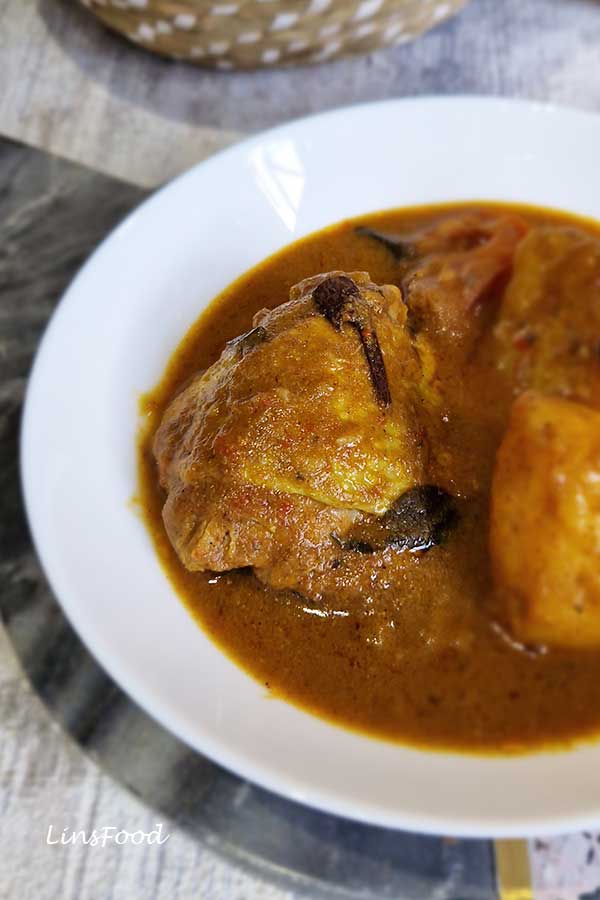
Kari ayam recipe (chicken curry) coming right up: chicken, potatoes, a good curry powder, and you’re basically halfway to dinner. Let it simmer into a rich, coconutty Singaporean/Malaysian chicken curry gravy, then serve it with roti prata (roti canai in Malaysia). Basic? Yes. Boring? Absolutely not.
Estimated reading time: 10 minutes

What is Kari Ayam?
For non-locals, here’s the quick translation lesson:
Kari = curry
Ayam = chicken
Kari ayam literally means chicken curry. In the Singapore-Malaysia world, it’s the everyday curry that shows up at home, at hawker centres, and at mamak stalls: usually with potatoes, often with curry leaves, and very popularly served with roti for maximum gravy mopping.
And this is why I roll my eyes a little when the internet insists on calling it “Malaysian curry” as if it lives behind an immigration checkpoint. It doesn’t. You can just as easily call it Singaporean chicken curry. This curry lives wherever Singaporeans and Malaysians like roti and rice and have the good sense to keep curry powder in the cupboard.
I’ve had many requests over the years for this chicken curry. Singaporeans ask for roti prata curry, Malaysians ask for roti canai curry. It’s always something like “What is the curry served with roti prata/roti canai?” So here we go.
This is the roti prata curry / roti canai curry. Gravy-forward, potato-friendly, curry-powder-led, and optionally coconutty. It’s not trying to be fancy. It’s trying to be simply delicious. Or deliciously simple.
A Little History
This kari ayam sits right in that shared food space where Malay and Indian Muslim (mamak) cooking meet everyday practicality. It’s not meant to be a “special occasion, 27-spice, look-at-me” curry. It’s a dependable, repeatable chicken curry that tastes like home or like the best kind of casual hawker centre lunch.
And yes. Even excellent cooks use pre-mixed curry powder for kari ayam. When I was younger and the wet market was a big part of our lives, curry powder was often mixed to order. But we still always had the packet ones, because they were indispensable. You never know when curry cravings will hit.
The difference isn’t whether the curry powder is homemade. The difference is what you do with it: fry it properly, simmer it patiently, and let the flavours settle.
Kari Ayam Recipe
It’s a straightforward curry powder chicken curry, but it has one non-negotiable step: frying the curry paste until it smells like “proper curry”. Remember the Pecah Minyak post I did not too long ago? Like that. Link to pecah minyak explainer here.
This is what we’ll be doing:
- Grind up the aromatics and stir in the curry powder and turmeric.
- Bloom the whole spices, then fry the aromatic-spice paste until pecah minyak.
- Add the chicken, water, tomatoes and potatoes, then simmer until done.
- Finish with coconut milk and curry leaves (or coriander leaves), then rest.
Step Snapshot (what to look out for)
- Blooming whole spices (30-60 seconds): the kitchen should smell warm and fragrant almost immediately.
- Frying the paste (10-15 minutes): it goes from wet and raw-smelling to deeper, darker and intensely fragrant.
- Pecah minyak: you’ll see oil separating around the edges of the paste, and the smell changes from “spice powder” to “curry shop”. This is the moment you move on with the recipe. Don’t worry if you don’t see much oil, as we’re only using 4 tablespoons of it to begin with.
How to do the pecah minyak stage properly
Keep the heat medium to medium-low and stir often. If the paste looks like it’s catching on the bottom, add a splash of water and keep frying. You’re not trying to dry it out, you’re trying to cook it through. See pecah minyak in action on my YouTube Channel here.
Timing notes (because chicken pieces are not all the same)
Bone-in chicken thighs/drumsticks: around 40-45 minutes total simmer time.
Boneless chicken: reduce to around 20-25 minutes, or it’ll dry out.
Smaller chopped pieces: check at 15-20 minutes.
Want it thinner (more roti-dunking gravy)?
Add another 100-200 ml water and simmer 5 minutes.
Want it thicker? Simmer uncovered a little longer, and let the potatoes do some natural thickening.
A quick curry powder guide
The flavour of your kari ayam will, to a large extent, depend on your curry powder. Shop around and find one you genuinely like.
Meat curry powder is usually the better match for kari ayam and roti curry. It tends to be warmer and rounder.
Fish curry powder tends to be sharper and more fenugreek-forward. It can still work with chicken, but the flavour will be more assertive and a little sharper. My late dad will tell you that I love eating roti prata with mamak fish curry. In fact I prefer it!
Baba’s and Adabi are popular Singaporean/Malaysian curry powder brands and both can run spicy if you’re not used to them. If you’re sensitive to heat, start with less curry powder, then add more later only if you need it. Or look for mild curry powder.
Toubleshooting
- Why does my chicken curry taste raw or harsh? The paste didn’t fry long enough. Go back and fry longer next time.
- My kari ayam is bitter: too much turmeric, burnt spices, or the paste caught on the bottom. Keep heat moderate and add splashes of water if needed.
- Why is my curry not fragrant? Under-fried paste or a weak curry powder. Fry longer and consider changing brand.
- Kari ayam is too thick: add water and simmer 5 minutes.
- My curry is too thin: simmer uncovered, or mash a couple of potato pieces into the gravy.
- How do I make kari ayam less spicy? Use a milder curry powder and start with less – you can always add more later. Coconut milk helps soften heat, and extra potatoes don’t hurt either.
Ingredients for Kari Ayam
We’re using very basic ingredients to cook this kari ayam. Curry leaves are the only “special” one, and even then, coriander leaves do the job if you don’t have them.
Chicken
I prefer chicken portions, because I get the best parts. In the video you’ll see chicken thighs, because that’s what I had. Bone-in pieces make a better gravy. If using boneless, reduce the simmer time so it stays juicy.
Want to make this vegetarian? Swap the chicken with tofu, or, as I do for my kids – vegan chicken pieces.
Curry powder and turmeric
Curry powder is the backbone. Turmeric helps colour and adds a little lift, but don’t overdo it or you can get bitterness. You can even skip turmeric if your curry powder is strong enough on colour and flavour.
Whole spices
Cinnamon, cardamom, cloves, star anise. They add that warm, stall-style background aroma. If you’re not a whole-spices person, you could skip them and still get a decent chicken curry.
Aromatics
Onions, garlic, ginger. This is your flavour base. Grind everything up, then mix in the curry powder and turmeric before frying. Just the way my grandma did it.
Potatoes
Classic with kari ayam and many curries. They help thicken the gravy, and curried potatoes are one of life’s small joys. Even if you “don’t really care for potatoes”. Like me.
Tomatoes
They add body and a gentle tang, and they help the curry powder taste more rounded instead of flat. They’ll soften and melt into the gravy.
Coconut milk
Optional, and that’s not me hedging. Some people want a lighter, more savoury curry. Some want it richer. We’re using a small amount here for balance, not a full-on coconut takeover.
Another option is to drizzle a little evaporated milk after cooking, for a touch of creaminess.
Curry leaves
If you have them, use them. If you don’t, coriander leaves at the end is the perfect finish for this basic kari ayam recipe.
How to Serve Kari Ayam
Here are some serving ideas:
- Roti prata (Singapore) / roti canai (Malaysia), obviously.
- Steamed rice, for the classic home plate.
- Nasi minyak (sometimes weirdly called ghee rice) if you want it a bit more special.
- Roti jala (net crepes). Recipe is next in the schedule.
- Add cucumber slices, quick pickles, or a little sambal if you like heat. Link to sambal recipes here.
How to Store Leftovers
Fridge
Cool quickly, cover, and refrigerate. Best within 3 days. The flavour usually improves overnight, because curry likes a good sleep.
Freezer
Freeze in portions up to 3 months. Potatoes can change texture after freezing (slightly grainy/soft). If that bothers you, freeze without potatoes and add fresh ones when reheating.
Reheating
Reheat gently on the hob with a splash of water. If it thickens in the fridge, that’s normal. Loosen and simmer.
Variations
No coconut milk version
Leave out the coconut milk and add a bit more water. You’ll get a lighter, more savoury curry. The potatoes will still give it body. I do this a lot.
Extra heat
Add chilli powder along with the curry powder, throw in fresh chillies with the tomatoes, or use a hotter curry powder.
Coriander finish (cilantro)
If using coriander leaves instead of curry leaves, add it right at the end, off the heat, so it stays bright.
More “mamak-style”
Keep it a little thinner and gravy-forward, and serve it with roti and sambal. Less coconut milk, more dunking-friendly.
Kari Ayam FAQs
Kari ayam is Singaporean/Malaysian chicken curry – chicken simmered in a curry powder gravy, often with potatoes and curry leaves, made for rice or roti dunking.
Both. It’s common in Malaysia and Singapore, and calling it “Malaysian curry” like it belongs to one country is… just a no.
Kari ayam is typically curry-powder-led and often finished with curry leaves and sometimes coconut milk; Indian chicken curries vary wildly by region and often start with different spice bases and techniques. There is no single Indian chicken curry. And this kari ayam is just one type of Singaporean and Malaysian chicken curry.
Either, depending on whether you’re eating it with rice or using it as roti prata/roti canai curry – gravy-forward is the classic dunking style.
Use a curry powder you actually like the taste of – brands vary hugely. “Meat curry powder” is usually the safest bet for chicken. Read article above.
Yes – that’s literally how most everyday kari ayam is cooked. The key is frying the curry powder properly so it doesn’t taste raw.
Fish curry powder is often sharper and more fenugreek-forward; meat curry powder tends to be warmer and rounder, which suits chicken and potatoes better.
Yes, it actually tastes better the next day. Reheat gently with a splash of water and you’re back in business.
Absolutely. Plenty of people do – you’ll get a lighter, more savoury curry, and the potatoes will still give it body.
Yes, freeze it in portions. Potatoes can turn a bit grainy after freezing, so if that bothers you, freeze without potatoes and add fresh ones when reheating.
Nothing. Same bread family, South Indian heritage, different local name.
And there you go. Probably more information then you needed, but hey, recipe’s below!
Let me know if you make it.
Lin xx
Kari Ayam Recipe (a Basic Chicken Curry from Singapore and Malaysia)
Ingredients
- 2 large potatoes
- 4 tomatoes
- 1 kg chicken portions
- 4 Tbsp vegetable oil
- 3 sprigs curry leaves OR fresh coriander leaves added at the end
- 200 ml coconut milk half a large can
- 250 ml water
- 1 tsp salt
- black pepper not traditional, but always use pepper when using turmeric
Grind to a Paste
- 2 medium onions
- 4 cloves garlic
- 5 cm ginger
- 4 Tbsp curry powder
- ¼ tsp turmeric
Whole Spices
- 1 small cinnamon stick
- 3 cardamoms
- 2 cloves
- 1 star anise
Instructions
Prep Work
- Peel and roughly chop up the onions and place in a blender or food chopper. Add the garlic, roughly chop up the ginger and do the same.2 medium onions, 4 cloves garlic, 5 cm ginger
- Blend everything to a fine paste. You shouldn't need any added water, but add some if you do. Not too much.
- Stir in the curry and turmeric powders.4 Tbsp curry powder
- Peel and quarter the potatoes.Halve the tomatoes.¼ tsp turmeric
Let's get Cooking
- Heat 3 Tbsp oil in a roomy pot on medium heat and fry the whole spices and curry leaves for 20 seconds.3 sprigs curry leaves, 1 small cinnamon stick, 3 cardamoms, 2 cloves, 1 star anise, 4 Tbsp vegetable oil
- And the blended ingredients-curry powder mix and stir well. Fry this curry paste for 10 – 15 minutes. Add a tiny splash of water if necessary. You want the paste to give off an aroma, and you'll also start seeing tiny drops of oil separating from the paste.
- Tip in the chicken and coat well with the fried paste.1 kg chicken portions
- Add the coconut milk, water, potatoes and salt and stir well. Bring to a simmer, cover and lower heat right down. Cook for 45 minutes until your chicken and potatoes are cooked through.2 large potatoes, 200 ml coconut milk, 250 ml water, 1 tsp salt
- Add the tomatoes about 5 minutes before the end of cooking time. I tend to throw them in when everything is fully cooked, so they are only just soft.Check seasoning and add more salt if necessary and some freshly ground black pepper to complement the turmeric.4 tomatoes, black pepper
- Turn off the heat and let the curry rest for 10 minutes before serving. Top with some fresh coriander leaves (cilantro) if you like.
Nutrition
Enjoyed this recipe? Add us to your Google Search Preferred Sources: