

Enjoyed this recipe? Add us to your Google Search Preferred Sources:
Torch ginger flower, or bunga kantan, is one of Southeast Asia’s most distinctive aromatics. Floral, tangy and gently peppery, it’s an essential flavour in dishes such as Penang asam laksa and is also used in salads, sambals, curries and fish dishes.
In Indonesia, you’ll probably know it as kecombrang – although that’s only one of its many regional names.
Estimated reading time: 13 minutes
Table of contents
- What is Bunga Kantan?
- Is Bunga Kantan Really a Flower?
- What Does Torch Ginger Flower Taste Like?
- Bunga Kantan, Kecombrang and Its Other Names
- How it’s used in Singapore and Malaysia
- Kecombrang in Indonesian Cooking
- Is Bunga Kantan Used Elsewhere in Southeast Asia?
- Has Torch Ginger Flower Travelled Beyond Southeast Asia?
- Which Parts of Torch Ginger Are Edible?
- How to Cut and Prepare Bunga Kantan
- Where to Buy Bunga Kantan
- How to Store Torch Ginger Flower
- Can You Freeze Bunga Kantan?
- What Can You Substitute for Bunga Kantan?
- Frequently Asked Questions
- Final Word
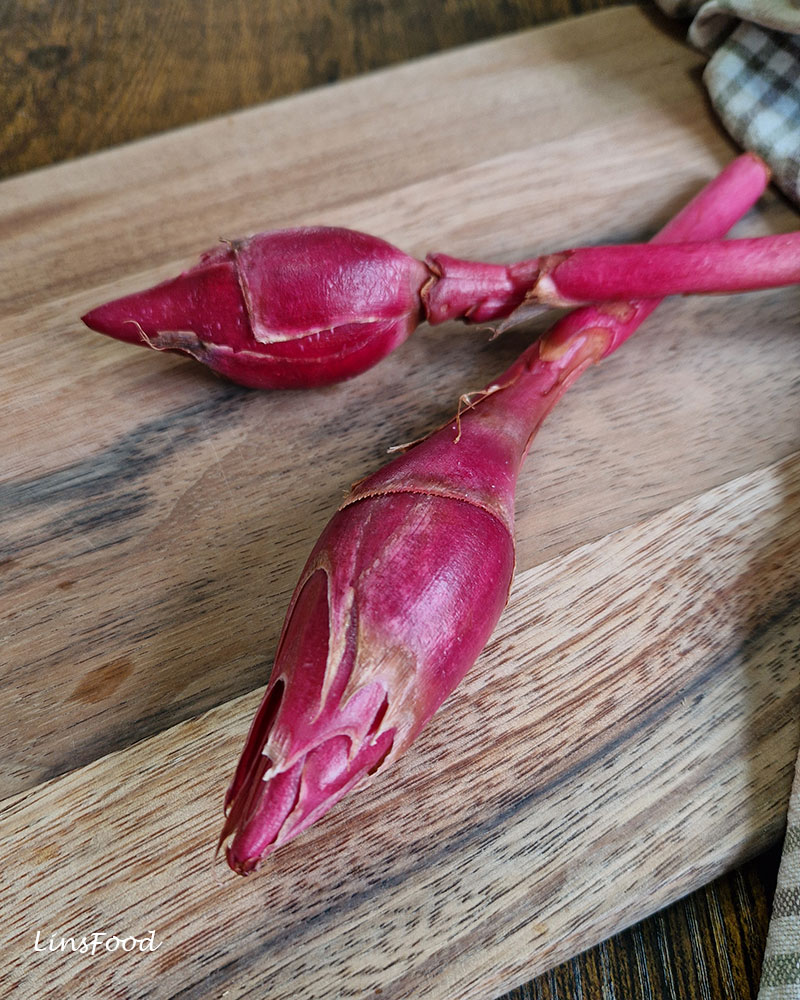
What is Bunga Kantan?
Bunga kantan, or torch ginger flower in English, is the edible young flower head of Etlingera elatior, a large tropical plant belonging to the ginger family, Zingiberaceae.
That makes it a relative of ginger, turmeric and galangal, although we use it rather differently.
With ordinary ginger, we’re mainly after the rhizome underground. With bunga kantan, the part most familiar to cooks in Singapore and Malaysia is the young, unopened pink flower head.
The plant itself isn’t remotely dainty. Torch ginger grows from underground rhizomes and can reach several metres high, producing tall leafy shoots in large clumps. The flower stalks emerge separately from the base of the plant. Singapore’s NParks describes Etlingera elatior as a rhizomatous perennial that can reach around 3-6 metres tall.
So that rather elegant pink bud sitting on the chopping board comes from a plant capable of taking up a whole lot of one’s garden.
Kew gives the native range of Etlingera elatior as Peninsular Thailand to western Malesia – a botanical region covering much of maritime Southeast Asia, including the Malay Peninsula, Sumatra, Java and Borneo.
Is Bunga Kantan Really a Flower?
Yes, although technically what we’re using is an inflorescence – a flower head made up of many smaller flowers.
The large pink or red parts are mostly bracts. As the head matures, the much smaller true flowers emerge between them.
For cooking, we generally want bunga kantan before it reaches its fully opened, ornamental stage.
The young inflorescence is edible and is commonly shredded into salads and rojak or used to flavour dishes such as laksa and curries.
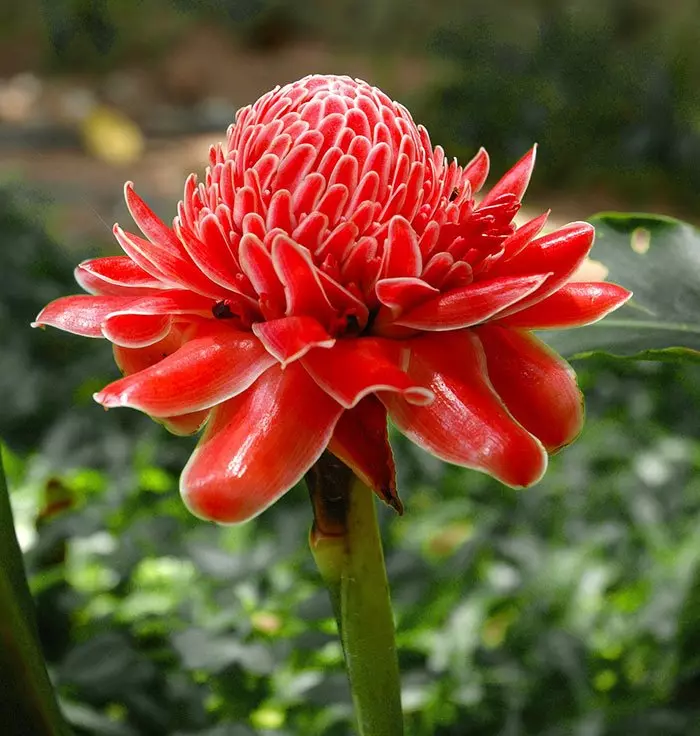
The English name torch ginger flower comes from the mature inflorescence, which rises from the ground in a mass of bright pink or red bracts and resembles a flaming torch.
What Does Torch Ginger Flower Taste Like?
Bunga kantan is one of those ingredients that becomes increasingly difficult to describe the longer you try.
It’s floral, tangy and citrusy, with a light pepperiness and a very distinctive perfume. Smell and flavour can be subjective , so many have also described its flavour as slightly sweet, slightly bitter, with pungent and astringent notes, and fruity, earthy, pine-like and lemon-like aromas.
In practical kitchen terms, there are hints that might remind you of ginger, citrus peel or lemongrass, but none of those is really a substitute for the flavour.
Cut into a fresh bunga kantan and you’ll understand why. The scent comes up immediately.
It works particularly well with fish, seafood, tamarind, chilli and fermented ingredients because its brightness cuts through stronger flavours without vanishing underneath them.
Raw bunga kantan is fresher and more obviously floral. Cooking mellows it and integrates the fragrance into the dish.
Bunga Kantan, Kecombrang and Its Other Names
Bunga kantan is the Malay name most commonly used in Malaysia and Singapore.
Bunga means flower, while kantan is the name of the plant.
Cross into Indonesia and the names multiply.
Kecombrang is probably the Indonesian name most widely recognised nationally, but regional languages have their own names. You’ll encounter forms including honje in Sundanese-speaking areas, kecicang in Bali, asam cikala among Karo communities and kincung in parts of Sumatra.
Different regions also use different parts of the plant and prepare them in different ways. The names often belong to distinct local food traditions.
The scientific name has wandered about too.
Older books may refer to bunga kantan as Alpinia elatior, Nicolaia speciosa or Phaeomeria speciosa. These are among the synonyms now placed under the accepted botanical name, Etlingera elatior.
Useful to know when you’re looking through older Malaysian and Indonesian references and wondering whether there’s another giant ginger plant you need to know!
How it’s used in Singapore and Malaysia
If there’s one dish most strongly associated with bunga kantan, it’s probably Penang asam laksa.
That sharp floral fragrance belongs beautifully with the sour fish broth, tamarind, chilli and herbs.
It’s a key ingredient in Penang asam laksa, where it’s ground with other aromatics before being incorporated into the fish and tamarind broth.
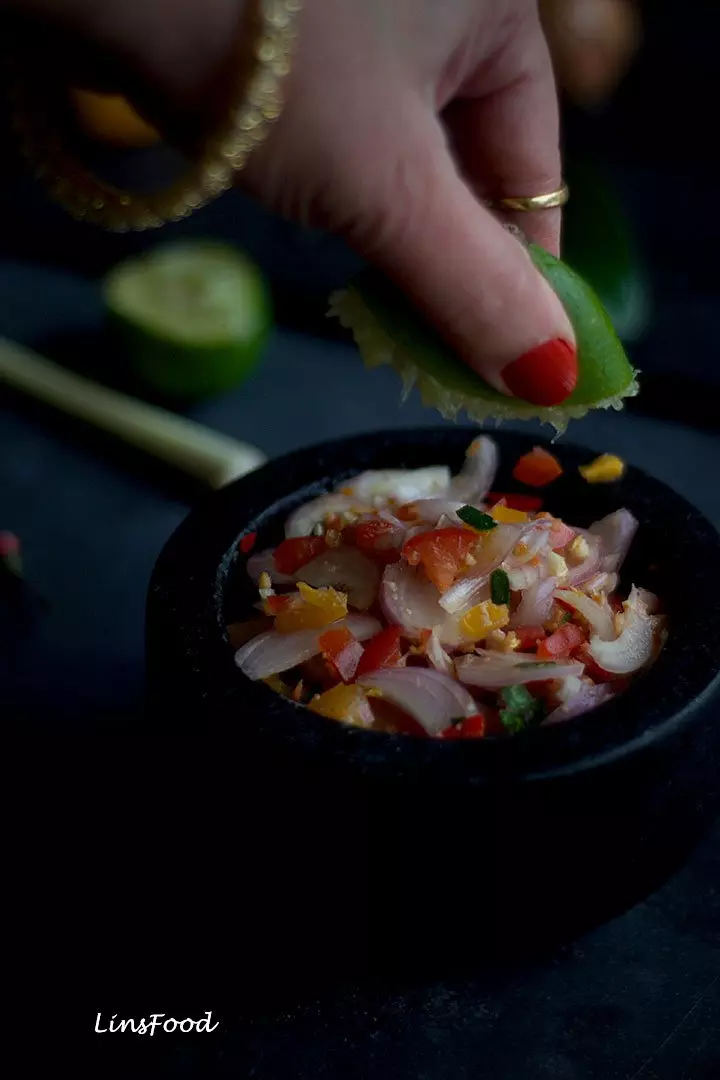
It’s also used in Chinese rojak, particularly in Singapore, where finely sliced bunga kantan is added to the dark dressing made with ingredients such as tamarind, lime, chilli and prawn paste.
Across Malaysia, you’ll find bunga kantan in salads (kerabu), fish dishes, sour curries, sambals and rice dishes such as nasi ulam and nasi kerabu.
The way it’s prepared depends on what you want from it.
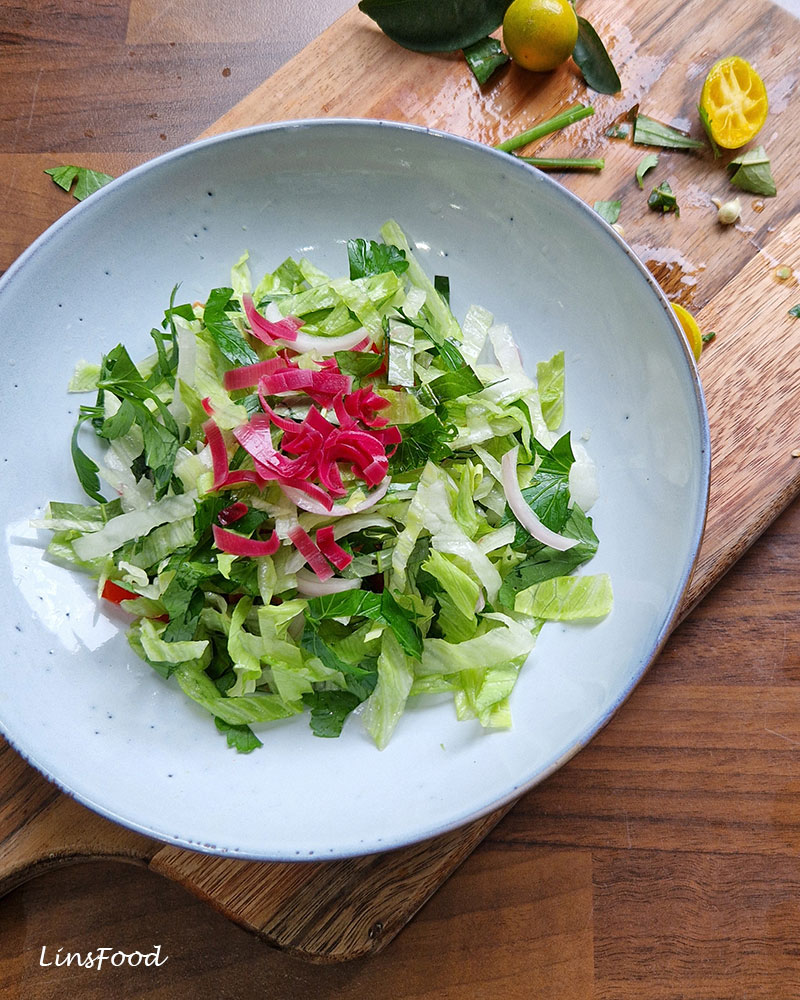
In a salad, the bud is usually sliced extremely finely and eaten raw, preserving its fragrance and slight crunch.
In laksa, curries and fish dishes, it may be chopped, pounded or blended with other aromatics and cooked into the sauce or broth.
Bunga kantan can be quite assertive raw, which is exactly why it works so well among herbs and strong dressings.
Kecombrang in Indonesian Cooking
Indonesia gives us a much bigger view of what Etlingera elatior can do.
A 2025 literature review published in the Journal of Ethnic Foods documented kecombrang in more than 80 Indonesian dishes across more than 15 regions. The review records the culinary use not only of the flower but also the fruit, stem, leaves and rhizome.
In West Java, where the plant is often known as honje, it appears in sambals and other savoury preparations.
In Bali, you may encounter kecicang, referring to the flower, as well as bongkot, the tender lower stem used in dishes such as sambal bongkot.
In parts of Sumatra, names such as kincung and asam cikala turn up in dishes involving fish, sambals and sour preparations.
The 2025 Indonesian review records traditional dishes including gurame kincung, pindang ikan bunga kecombrang, sambal honje and pecel kecombrang.
Contemporary Indonesian chefs and food producers have taken the ingredient further, using kecombrang in everything from rice and noodles to drinks, sweets and restaurant dishes.
Is Bunga Kantan Used Elsewhere in Southeast Asia?
Yes, absolutely.
Thailand
Torch ginger also has a culinary life in Thailand, particularly in the south, where it’s known as dala or dalaa.
Its young shoots and flower heads are eaten, and the flower appears in salads and other southern Thai preparations.
This makes sense botanically too: the plant’s native range extends into Peninsular Thailand.
Borneo
Torch ginger flower is also native to Borneo and fits into a much wider Bornean tradition of cooking with aromatic Etlingera species.
This is where it’s worth being careful with names, because not every edible ginger that looks vaguely similar is bunga kantan.
One common example is tuhau (aka red ginger lily), strongly associated with Sabah. Tuhau generally refers to Etlingera coccinea, not Etlingera elatior.
Same genus. Different species.
Has Torch Ginger Flower Travelled Beyond Southeast Asia?
Very much so.
Kew records Etlingera elatior as introduced into places including southern China, the Philippines, New Guinea, Vanuatu, Mauritius, parts of Central America and several Caribbean islands.
Its spectacular mature flowers make it a popular ornamental tropical plant as well as a food crop – an interesting change in perspective.
In Southeast Asia, the young flower bud may be something you’re thinking about slicing into lunch.
Somewhere else, somebody is admiring the fully opened bloom in a tropical garden.
Neither is wrong, although I know which one I’m more interested in!
Which Parts of Torch Ginger Are Edible?
If you’re buying bunga kantan in Singapore or Malaysia, the part you’re most likely to encounter is the young flower head.
But different food cultures make use of considerably more of the plant.
Indonesian culinary records include the flower, fruit, tender stems, leaves and rhizome.
What gets used depends very much on the region and the dish.
That’s why it’s useful to distinguish between the plant itself, Etlingera elatior, and bunga kantan as the ingredient most Singaporean and Malaysian cooks recognise as the flower bud.
Outside Southeast Asia, the flower is by far the part you’re most likely to find in specialist food shops. That is if you find it at all.
How to Cut and Prepare Bunga Kantan
Start by rinsing the flower bud and trimming the dry base.
Remove any outer bracts that are damaged, browned or particularly tough.
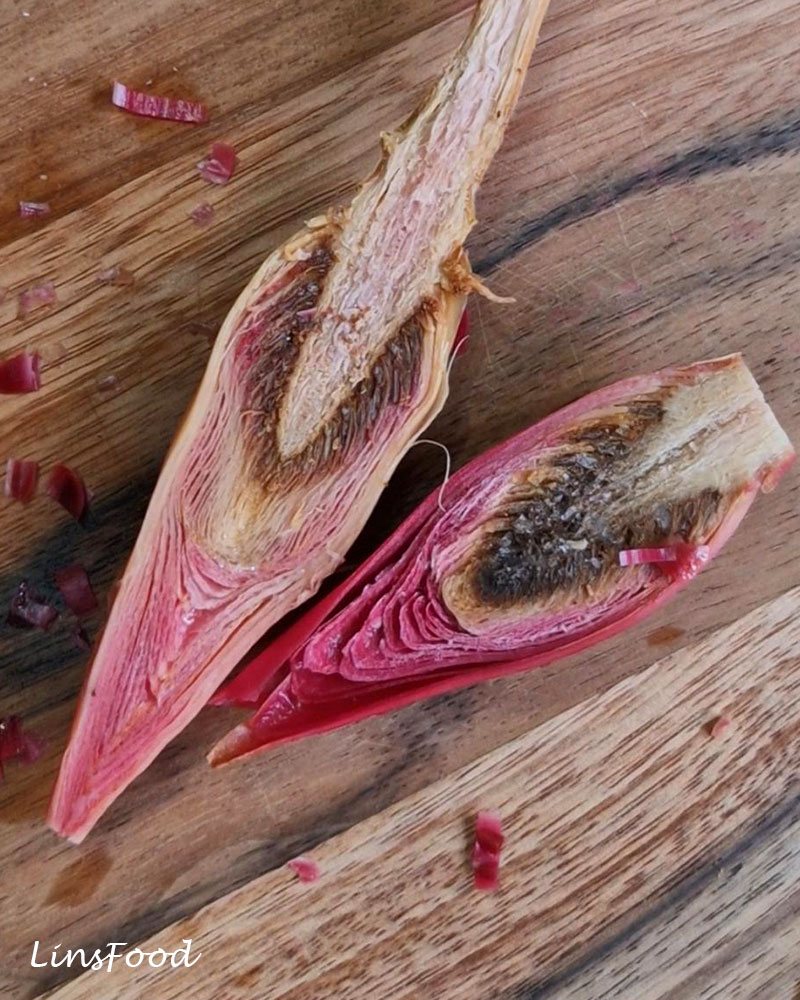
If you’ve never handled bunga kantan before, I recommend cutting one lengthways first. Partly because it lets you see how the flower is beautifully constructed.
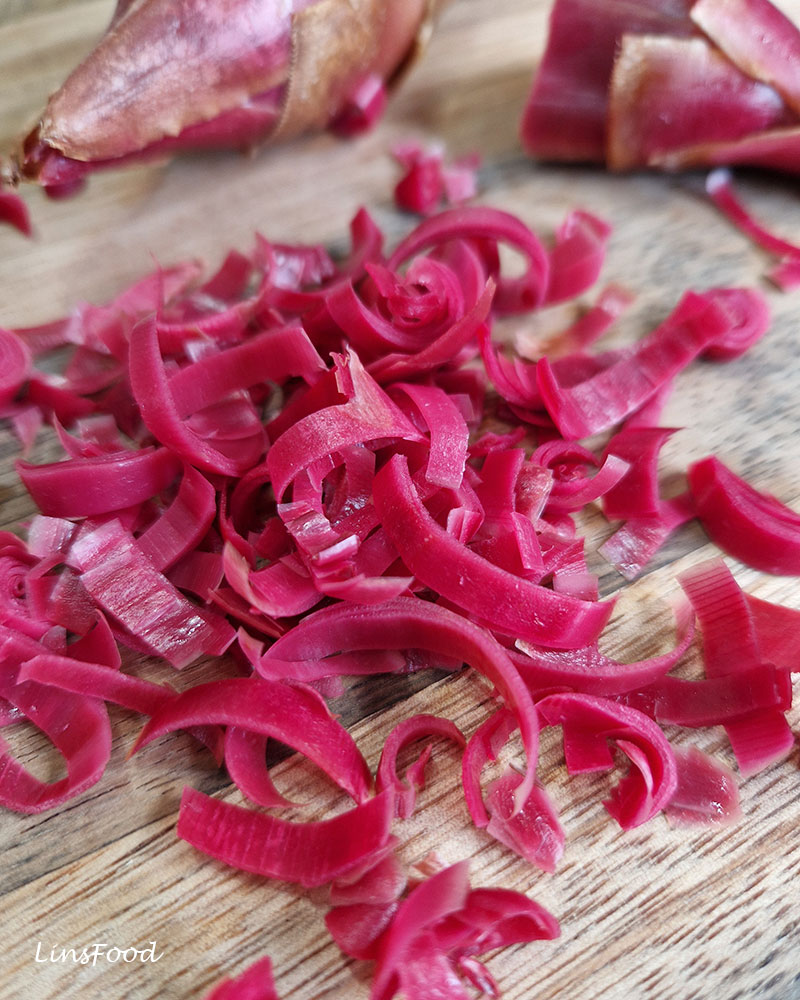
For salads, kerabu, rojak and raw garnishes, slice the bud very finely crossways. Thin slicing gives you the fragrance without leaving large fibrous pieces in the dish.
For cooked recipes, bunga kantan may be chopped, pounded or blended with other aromatics.
The paler lower part of a young bud can also be used if it’s tender. Don’t automatically discard half the flower because it isn’t pink enough.
And as you can see in my images, some parts are not as pretty frozen as they are fresh.
Where to Buy Bunga Kantan
In Singapore and Malaysia, fresh bunga kantan is commonly available from wet markets, supermarkets and produce sellers.
In the UK, look in Malaysian, Indonesian, Singaporean and Thai food shops, larger Asian supermarkets and specialist online grocers.
Fresh supplies can be very erratic.
You may also find bunga kantan frozen, either whole or already sliced.
For a raw kerabu or salad, I’d choose fresh whenever possible because you want both the texture and the perfume.
For laksa, curries and other cooked dishes, frozen bunga kantan is extremely useful.
When buying fresh flowers, look for firm buds with good colour. Avoid flowers that are very limp, slimy or badly browned.
How to Store Torch Ginger Flower
Keep fresh bunga kantan in the fridge.
I wrap mine loosely with kitchen paper and place them in a container or bag. The aim is to stop them drying out without trapping lots of moisture around them.
Use them while the buds are still firm and fragrant.
The perfume diminishes as the flower ages, and fragrance is rather the point here.
Can You Freeze Bunga Kantan?
Yes.
In fact, if I find good fresh bunga kantan in the UK, I quite often buy more than I immediately need and freeze the rest.
Wash and dry the buds thoroughly first.
You can freeze them whole, but I prefer to slice the flowers and portion them before freezing. That way I can take out just what I need for a laksa, curry or sambal.
Freezing softens the texture and darkens the inner parts but it retains much of its flavour and aroma.
For that reason, I’d use fresh bunga kantan for something like a raw kerabu where you want its texture as well as its flavour.
For cooked dishes, frozen is perfectly useful.
What Can You Substitute for Bunga Kantan?
There is no exact substitute for bunga kantan, but I’ll tell you in a minute what comes fairly close.
First, please ignore any advice you see online suggesting lemongrass, ginger, lime zest or some combination of the three.
Yes, they can give you citrus, freshness and warmth. No, they don’t taste anything like bunga kantan.
If you can’t get bunga kantan – highly likely in many parts of the world – my first choice would be daun kesum (click to read more), also known as Vietnamese coriander or Vietnamese mint. You can also watch a YouTube video of me explaining them here.
It’s not a direct replacement, but it does have some of that elusive tangy, slightly piney and peppery aroma that makes bunga kantan so distinctive. Daun kesum itself is wonderfully aromatic, with citrusy and peppery notes, so it gets you considerably closer in character than a bit of lime zest ever will.
There’s a small catch: daun kesum isn’t exactly parsley when it comes to availability either. But it’s generally easier to find than fresh bunga kantan, and in countries such as the UK, US, Canada and Australia it’s often available from Asian grocers, specialist herb suppliers and online.
For something like Penang asam laksa, this substitution makes particular sense because daun kesum is already one of the defining herbs in the dish. If the bunga kantan is missing, I’d increase the daun kesum slightly rather than introduce completely unrelated aromatics.
It still won’t taste quite the same.
But at least we’re now in the right neighbourhood.
Frequently Asked Questions
Bunga kantan is commonly called torch ginger or torch ginger flower in English. Its scientific name is Etlingera elatior.
Yes. Bunga kantan is the Malay name commonly used in Malaysia and Singapore for Etlingera elatior, particularly its edible young flower head. Torch ginger is its widely used English name.
Yes. Kecombrang is a widely recognised Indonesian name for the same plant, Etlingera elatior. Indonesia also has numerous regional names for it.
Bunga kantan has a floral, tangy, citrusy aroma with lightly peppery notes. Freshly cut flowers have a particularly strong perfume.
Yes. Young bunga kantan is commonly finely sliced and eaten raw in salads, rojak and similar dishes. It can also be pounded or cooked into laksa, curries and other dishes.
Perhaps the best-known example is Penang asam laksa. Bunga kantan is also used in Chinese rojak, kerabu and ulam-style salads, sambals, rice dishes, curries and fish dishes.
In Malaysia and Singapore, it’s usually the young unopened flower head that’s sold for cooking. Elsewhere in Southeast Asia, particularly Indonesia, other parts of the plant including tender stems and fruit are also used.
Trim the base, discard damaged outer bracts and slice the flower very finely across the bud for salads and garnishes. For curries and sauces, it can also be chopped, pounded or blended.
Yes. It freezes well for cooked dishes. Slice and portion it first for convenience, but use fresh bunga kantan when the crisp texture is important.
No. Bunga kantan is Etlingera elatior. Tuhau, associated particularly with Sabah, normally refers to Etlingera coccinea. They’re related members of the same genus, but different plants.
Final Word
And there you have it. Bunga kantan may be known internationally as torch ginger flower and across much of Indonesia as kecombrang, but those names only begin to describe its place in Southeast Asian food.
For me, it’s a flavour tied first to Singapore and Malaysia and later to food I’ve eaten in Indonesia, where I came to appreciate just how many ways the same plant can be used.
Perhaps that’s why I find bunga kantan much more interesting now than I did growing up with it. Kind of like orchids. I never fully appreciated them because they were everywhere – my dad had a huge orchird nursery in Penang.
If you’ve only encountered bunga kantan in a bowl of asam laksa, that’s an excellent introduction.
But as you see above, there’s quite a bit more to this flower than laksa.
More soon.
Lin xx
How to Prepare Bunga Kantan for Salads
Ingredients
- 1 bunga kantan (torch ginger flower)
Instructions
- Rinse the flower under cold running water and pat it dry.
- Trim the base. Cut off the dry end of the stalk and remove any bruised, browned or tough outer bracts.
- Cut it in half. Slice the flower lengthways. This makes it easier to check the inside and remove any damaged sections.
- Place the halves cut-side down and slice them as thinly as you can across the flower. Fine slicing is important, as thicker pieces can be fibrous and the flavour can be quite strong.
- Scatter the sliced bunga kantan through your salad. Start with a small amount, toss, taste and add more if needed.
Video
Notes
- Use bunga kantan raw while it’s fresh and fragrant.
- Both the pink upper part and the paler lower part can be used if they’re tender.
- For the best texture, slice it just before serving.
- Fresh bunga kantan has a strong floral, tangy and lightly peppery flavour, so a little can go a long way.
Enjoyed this recipe? Add us to your Google Search Preferred Sources: