

Enjoyed this recipe? Add us to your Google Search Preferred Sources:
Kerisik is toasted, ground coconut that adds a rich, nutty flavour to rendang and other dishes in Singapore and Malaysia (and elsewhere). Here’s how to make it at home with fresh, frozen or desiccated coconut, with tips for getting the colour and texture right.
Estimated reading time: 10 minutes
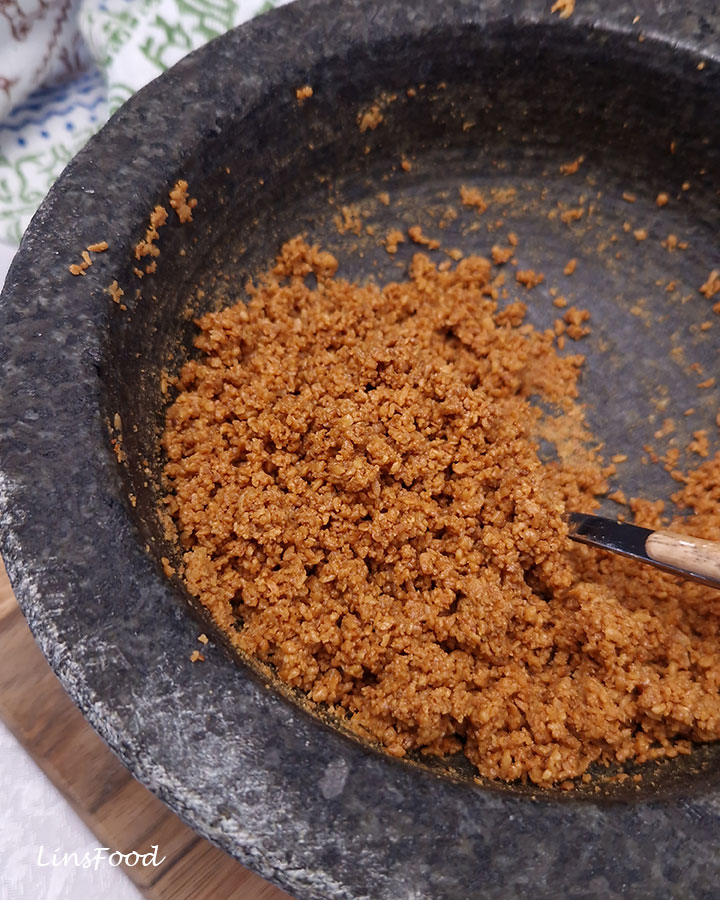
What is Kerisik?
Kerisik is made by toasting grated coconut in a dry pan, then pounding or grinding it. As the coconut browns, its flavour becomes deeper and toastier. Grind it further and it releases its oil, further enhancing its flavour and aroma.
It’s an ingredient you’ll come across in Malay cooking in Singapore and Malaysia, particularly in rendang. Related preparations are also used in Indonesia, so it certainly isn’t confined to our two countries.
And although you’ll sometimes see kerisik described as coconut butter, ordinary white coconut butter hasn’t been toasted and doesn’t have the same flavour.
What Does Kerisik Do to Rendang?
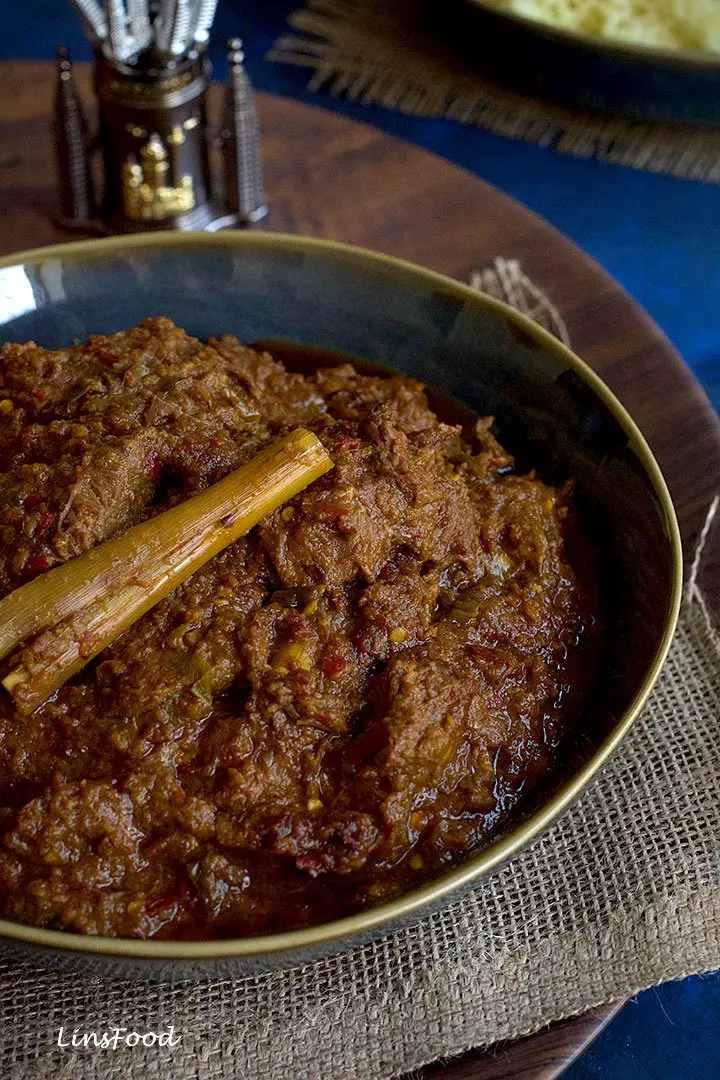
Kerisik adds a deep, toasted coconut flavour to rendang, along with richness and body. It helps give the sauce that thick texture that clings to the meat, and its nutty flavour is an important part of the rendang recipes I share here.
Kerisik is usually used alongside coconut milk. The coconut milk provides the rich cooking liquid, while the kerisik adds the flavour and texture of coconut that has been toasted separately and then ground.

Rendang Without Added Kerisik
Some rendang recipes develop their coconut flavour without adding kerisik. As the coconut milk slowly cooks down, its water evaporates and the coconut oil separates. With continued cooking, the remaining coconut solids and spices fry and brown in that oil, developing a deeper flavour and darker colour.
This slow reduction of coconut milk is central to traditional Minangkabau rendang cooking in West Sumatra. Indonesian rendang recipes without separately added kerisik belong to that established tradition.
Rendang without kerisik is also found in Malaysian home cooking, including some versions of rendang ayam Kelantan. The choice varies between recipes and households, so it’s more accurate to describe the particular rendang than to draw a firm line between Indonesian and Malaysian methods.
For a recipe that calls for kerisik, however, it makes a real difference. Leaving it out changes the flavour and texture, and extra coconut milk isn’t a direct substitute for its concentrated, toasted character.
The Recipe
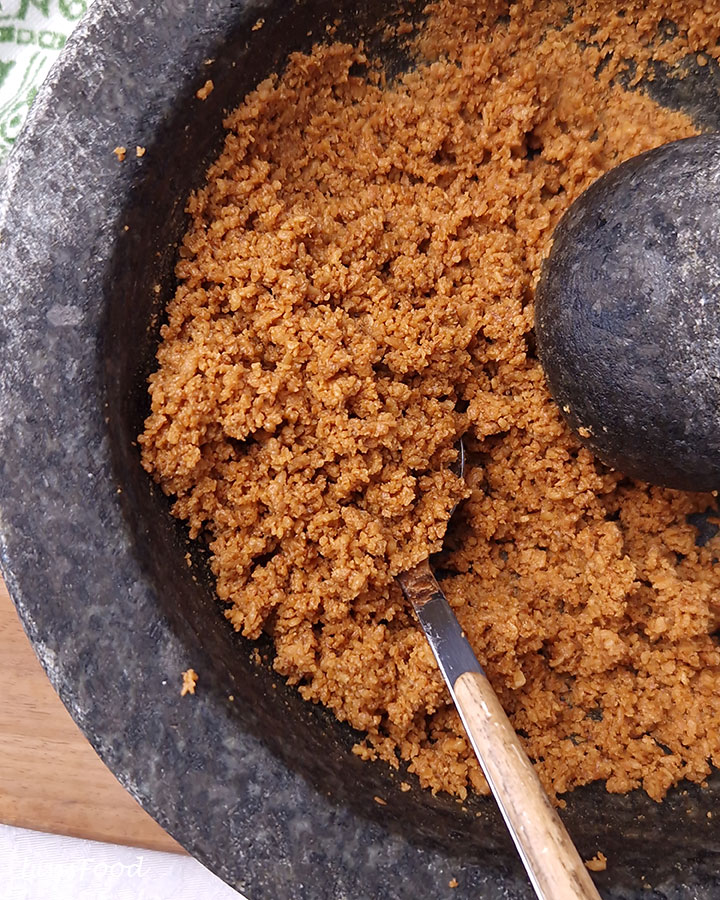
Making kerisik involves two stages: toasting the coconut, then pounding it until it’s finely crushed and beginning to release its oil.
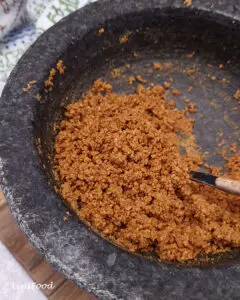
To me, a crumbly, slightly sticky mixture with a light sheen of oil is just right. It doesn’t have to become a smooth, wet paste. That’s how my family has always made kerisik, and I’ve never felt the need to take it any further.
You can use freshly grated coconut, thawed frozen coconut or unsweetened desiccated coconut. The method’s the same, but desiccated coconut generally toasts more quickly because it’s already dry.
So for those of us who don’t have access to freshly grated coconut, the frozen variety or desiccated coconut work just as well. In the video, I’m using desiccated coconut.
For the quantities below, use these approximate toasting times:
| Coconut | Toasting time |
|---|---|
| Desiccated coconut | 5-10 minutes |
| Fresh or thawed frozen grated coconut | 15-25 minutes |
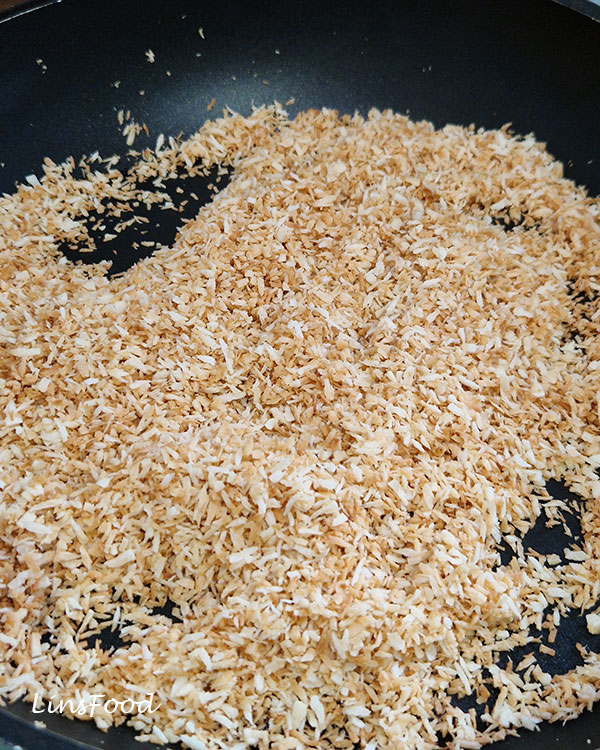
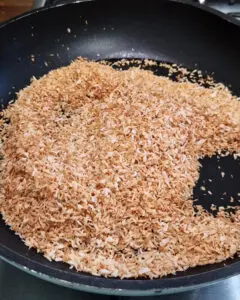
Watch the coconut rather than the clock. You’re looking for an even, deep golden brown and a pleasantly nutty, toasted smell. Lower the heat if it starts colouring too quickly.
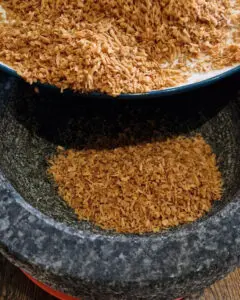
Once toasted, pound it while it’s still warm. Light pounding produces crumbly kerisik; keep going for the moist, oily paste we’re making here.
Ingredients
The main ingredient is mature coconut. Here are your options:
| Coconut | How to prepare it | What to expect |
|---|---|---|
| Freshly grated mature coconut | Use finely grated flesh | A good choice for fresh coconut flavour, if it’s available |
| Frozen grated coconut | Thaw and drain any loose liquid | Convenient, with no grating required, although some pulsing may be required to get a finer shred, but only if the pieces are large |
| Frozen coconut chunks | Thaw, cut smaller and pulse into fine crumbs | A useful alternative when frozen grated coconut isn’t available |
| Unsweetened desiccated coconut | Use straight from the packet | The easiest option, with a shorter toasting time |
Using desiccated coconut
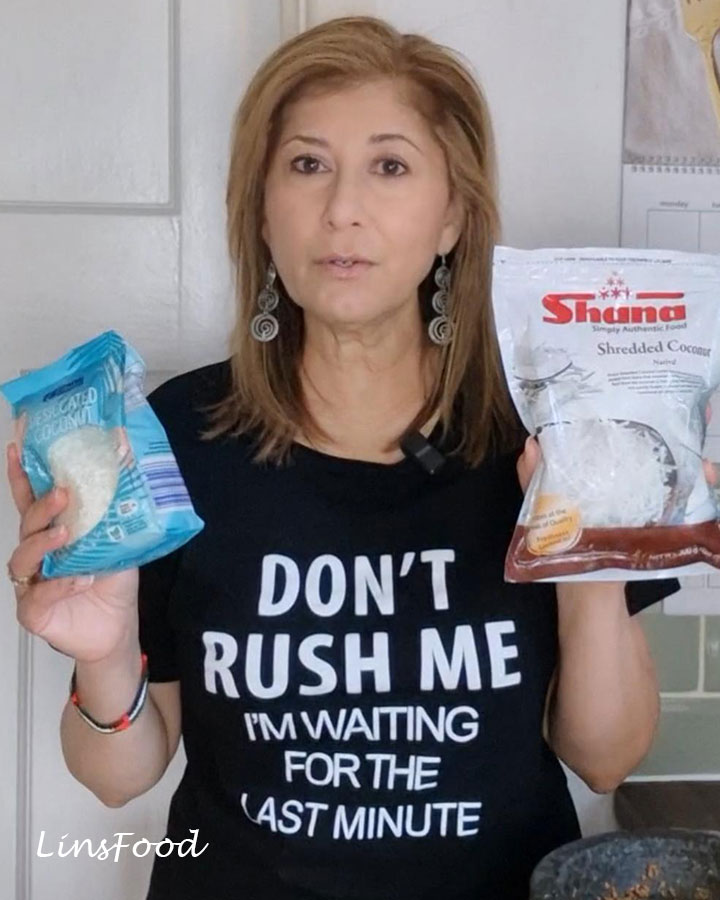
Yes, you can make kerisik with desiccated coconut. Choose plain, unsweetened, full-fat coconut, preferably finely desiccated.
Avoid sweetened coconut, reduced-fat products and coconut flour. Coconut flour behaves quite differently, and we need the coconut’s natural fat for the paste.
There’s no need to soak the coconut for this method. Some recipes moisten it first, but here we’re toasting it directly over gentle heat. Because it’s already dry, it can brown quickly.
Fresh coconut is my first choice when it’s readily available, but desiccated coconut is a perfectly useful option. You can still make your rendang, with no loss of flavour whatesoever.
Using Frozen Shredded Coconut
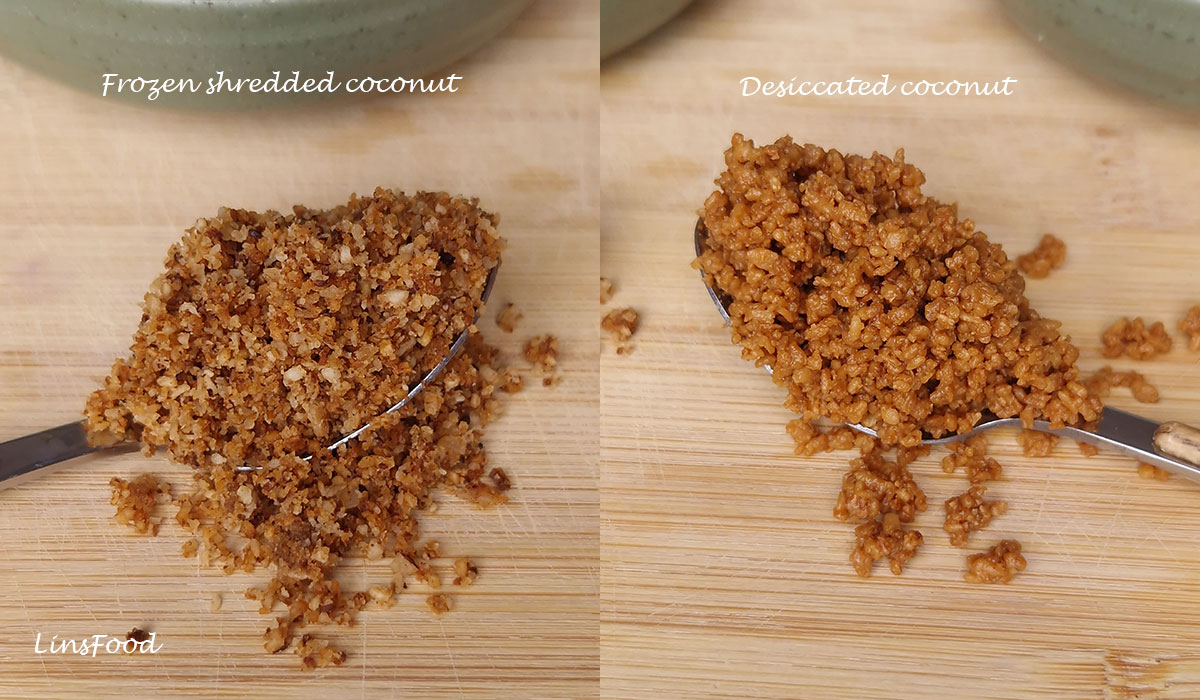
Frozen shredded coconut often comes in longer, coarser shreds, so it’s best to give it a few short pulses in a food chopper once thawed and drained. You want finer, fairly even pieces – stop before it becomes a wet paste.
As you can see in the photo below, the larger pieces remain lighter in colour because they take longer to brown. If you leave the shreds whole, the smaller pieces can start to burn while you’re waiting for the larger ones to catch up.
Desiccated coconut browns more uniformly, as does the finely grated fresh coconut we buy from grocers.
Using frozen coconut chunks
If the frozen coconut you can find comes in large pieces, you can reduce them in a food processor before toasting.
- Thaw the coconut in the fridge, following the packet instructions. Use firm, mature coconut flesh rather than soft young coconut.
- Drain any loose liquid and pat the pieces dry. There’s no need to squeeze the moisture out of the flesh.
- Cut large pieces smaller so your processor can handle them.
- Pulse in small batches, stopping to scrape down the bowl, until you have fine, fairly even crumbs. Pick out any stubborn larger pieces and process them again.
- Toast the crumbs as you would grated coconut. Don’t add water to help the machine along.
A processor chops the coconut rather than producing neat strands, but that’s fine for kerisik. Evenness is more useful here than appearance: big chunks and fine crumbs won’t brown at the same speed.
How to Use Kerisik
Rendang is an excellent place to start. You can use your homemade kerisik in my:
- Beef Rendang
- Chicken Rendang
- Vegetarian Rendang
- other curries that are not rendang, like kerutuk, coming soon
- Nasi Ulam – updated recipe coming soon
- salads
- serunding to deepen the aroma
- my grandma used it in some sambals, especially sambal kelapa (coconut sambal)
Check individual recipes: you may need lightly pounded coconut rather than an oily paste.
Measure it at the stage specified in your recipe. If the ingredient list calls for 4 Tbsp of finished kerisik, measure it after toasting and grinding. Four tablespoons of raw coconut won’t necessarily produce four tablespoons of kerisik: moisture is lost during toasting, and grinding compacts it.
The point at which you add kerisik to a rendang also varies by recipe. Follow that recipe’s method rather than assuming it must always go in at the end.
Toasted Coconut in Other Cuisines
Toasting coconut before pounding or grinding it is a technique shared by several cuisines. The degree of browning, additional ingredients and finished texture vary.
In Indonesia, ambu-ambu and the Acehnese u neulheu are particularly close to kerisik: roasted coconut ground for use as a cooking ingredient.
Sri Lankan kalu pol preparations often combine roasted coconut with toasted rice, while Kerala’s varutharacha curries use a paste of coconut roasted and ground with spices. Varutharacha describes the roasting-and-grinding method.
Further afield, Guyanese coconut choka and Trinidadian roasted coconut chutney use fire-roasted coconut ground with chilli, garlic and other seasonings.
Tausug cooking in the southern Philippines takes the coconut darker still. Siyunog lahing is deliberately charred coconut, which is pounded and combined with aromatics to make pamapa itum, a seasoning paste used in dishes such as chicken pyanggang and tiyula itum.
How to Store Kerisik
Allow the kerisik to cool, then transfer it to a clean, dry, airtight container. For this thoroughly toasted version, made without added liquid, keep it in the fridge for up to 2 weeks.
For longer storage, freeze it in small portions and use within 3 months for the best flavour. Tablespoon-sized portions are handy: freeze them separately, then transfer them to a sealed freezer container. Ice cube trays with a cover are great for this.
Thaw only what you need in the fridge. Kerisik may become quite firm when chilled because the coconut fat solidifies; that’s normal.
Always use a clean, dry spoon. Discard it if there’s mould or an unpleasant, rancid smell.
FAQs
The coconut has probably scorched. Aim for an even, deep golden brown with a pleasant toasted smell. Blackened flecks and an acrid smell suggest it’s gone too far. Burnt kerisik can spoil a whole pot of rendang, so start again if it tastes bitter.
It may need more grinding, or the batch may be too small for the blades to catch properly. Scrape down the bowl and continue in short runs, allowing the motor to rest as needed. A pestle and mortar can work better for a small quantity. Full-fat coconut is important; reduced-fat coconut won’t behave in the same way.
Neither is essential for this method. The coconut contains its own oil, which is released as you grind it. Some methods moisten desiccated coconut with coconut milk before toasting, but you can also toast it directly. Don’t add water or coconut milk during grinding to force it into a paste.
No. Desiccated coconut is dried coconut. Kerisik is coconut that has been toasted and then pounded or ground. You can use desiccated coconut to make kerisik, but adding it straight from the packet won’t give you the same flavour.
No. Rendang recipes vary across regions and households. Kerisik is an ingredient in the rendang recipes linked above, but it isn’t a requirement for every version of rendang.
Final Word
And there you have it, homemade kerisik, ready for your next rendang. Use fresh coconut if you have it, or reach for the desiccated coconut and get the pan out.
If you make it, do leave me a comment and a rating below. And if you’ve got any questions, just ask. Find me on Instagram @azlinbloor to connect and to shares yur pictures.
Lin xx
Kerisik Recipe
Equipment
- 1 wide, heavy-based frying pan or wok
- 1 spatula
Ingredients
- 200 g unsweetened, full-fat desiccated coconut or grated mature coconut, fresh or thawed frozen – see Notes
Instructions
- Toast the coconut. Put the coconut in a dry frying pan over a low to medium-low heat. Don’t add oil.200 g unsweetened, full-fat desiccated coconut
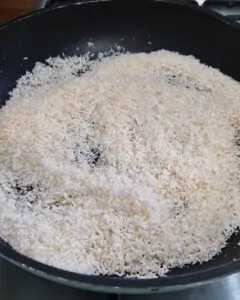
- Keep stirring. Move the coconut continuously across the base and around the edges of the pan until it’s an even, deep golden brown and smells nutty and toasted. Lower the heat if it colours too quickly. See Notes for approximate timings.
- Transfer immediately. Tip the toasted coconut into your mortar so it stops cooking in the hot pan. Work in batches if necessary.
- Pound while warm. Pound and grind the coconut, pressing it against the sides of the mortar. Continue until it releases its oil and forms a moist, slightly glossy paste. A little graininess is fine.
- Use or store. Use the kerisik in your recipe, or let it cool completely before transferring it to a clean, dry, airtight container.
Notes
- Toasting times: allow approximately 5-10 minutes for desiccated coconut, or 15-25 minutes for fresh or fully thawed frozen coconut. These are guides; moisture, shred size, pan size and heat all affect the timing.
- Frozen coconut: thaw completely in the fridge and drain any loose liquid before weighing. Reasonably even shreds can go straight into the pan. Particularly thick or uneven pieces can be pulsed finer first.
- Desiccated coconut: use 100g plain, unsweetened, full-fat desiccated coconut in place of the 200g fresh or frozen coconut. There’s no need to soak it.
- Pounding time: allow roughly 5–15 minutes, although a larger batch or finer paste may take longer. Judge it by the texture rather than stopping at a set time.
- Using a machine: a small processor or grinder suitable for oily pastes can replace the mortar. Let the coconut cool to a temperature permitted by the manufacturer, then grind in short runs, scraping down and resting the motor as needed.
- For crumbly kerisik: stop pounding sooner, while the coconut is finely crushed and just beginning to clump. Follow the texture specified in the dish you’re making.
- Measuring: measure finished kerisik after toasting and pounding. A tablespoon of raw coconut won’t necessarily produce a tablespoon of kerisik.
- Storage: refrigerate in an airtight container for up to 2 weeks, or freeze in small portions for up to 3 months for the best flavour. Always use a clean, dry spoon.
Nutrition
Enjoyed this recipe? Add us to your Google Search Preferred Sources: