

Enjoyed this recipe? Add us to your Google Search Preferred Sources:
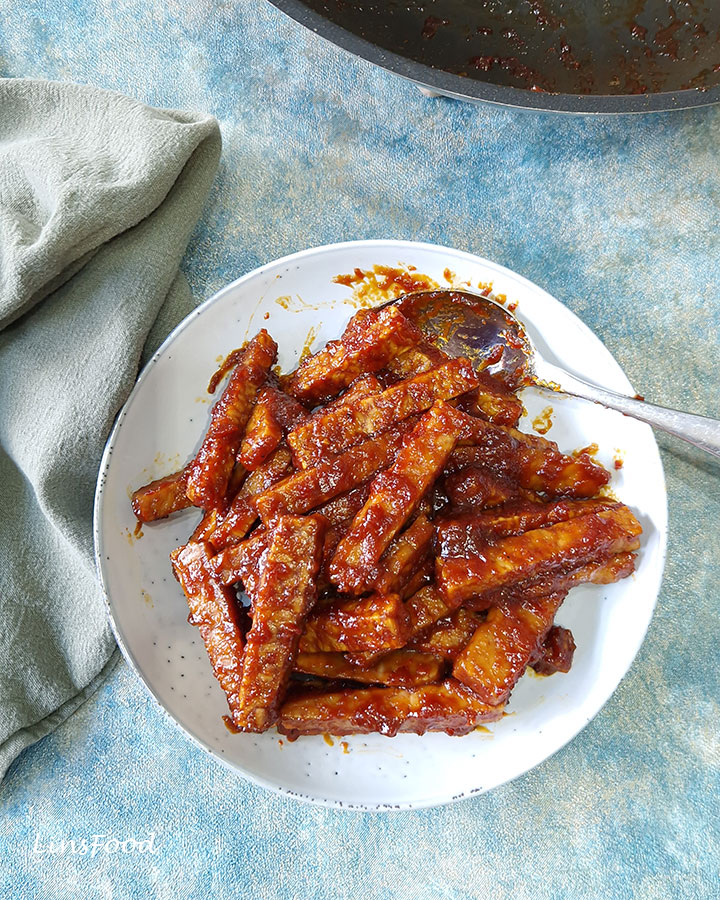
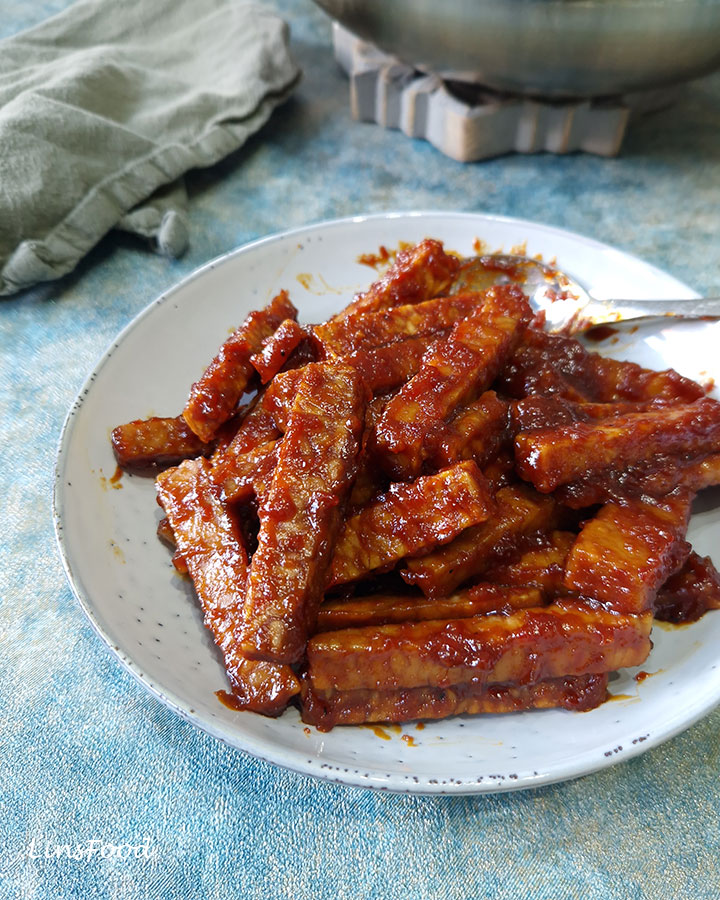
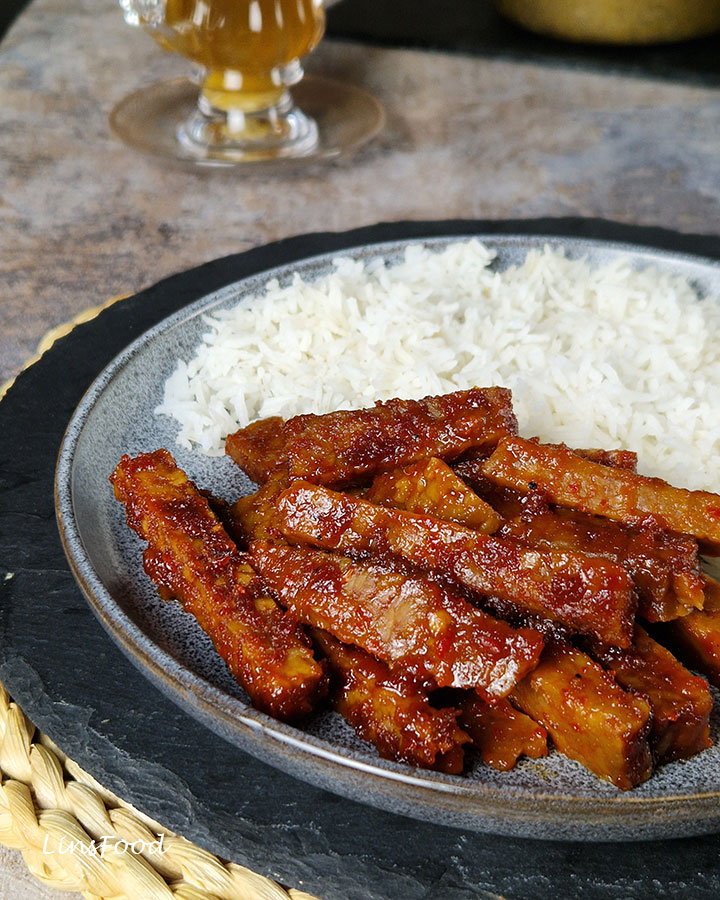
This Tempeh Sambal is made with golden fried tempeh tossed in a glossy, sticky chilli sauce that’s sweet, spicy and slightly tangy. It’s a delicious Malay-style dish, completely vegan, and made with fresh red chillies, gula Melaka and tamarind.
Serve it with some hot rice and a few slices of cucumber, and you’ve got yourself a very satisfying meal.
Estimated reading time: 11 minutes
What is Tempeh Sambal?
Tempeh sambal is a dish of fried tempeh cooked in a chilli-based sauce. There are many variations, from dry, crunchy versions to softer ones with a generous coating of sambal.
For this recipe, we’re frying the tempeh until golden and crisp before tossing it in a thick, sweet and spicy sambal. The sauce softens the exterior slightly, leaving us with a lovely sticky coating and a little chew underneath.
My version is completely vegan, without dried anchovies or belacan (fermented shrimp paste), both of which you’ll find in some versions.
Language Fun
Tempeh Sambal or Sambal Tempeh?
You may have noticed that I’ve called this dish tempeh sambal rather than sambal tempeh. Both refer to the same dish, but English and Malay generally arrange their words differently.
In English, we usually put the ingredient before the type of dish: chicken curry, prawn sambal and tempeh sambal. In Malay, the order is reversed. We name the dish first, then specify what’s in it: kari ayam, sambal udang and sambal tempeh.
This follows the Malay grammatical principle of Diterangkan–Menerangkan (D–M), where the main thing being described comes first, followed by the word that tells us more about it. So in sambal tempeh, sambal is the dish and tempeh tells us what it’s made with.
Since I write my recipes in English, I use the English word order: tempeh sambal. The Malay name remains sambal tempeh. Which I’d use when speaking to a Malay speaker.
Tempeh in Malay Cooking
Tempeh is a fermented soybean cake believed to have originated in Java, Indonesia, where it has been eaten for centuries. It’s also a familiar ingredient in Malay, Nyonya and Eurasian cooking in Singapore and Malaysia, whether simply fried, cooked with coconut milk or combined with vegetables, as in our Sambal Goreng.
Confession time: I absolutely hated it when I was younger, and it’s only in the last decade or so that I’ve started to appreciate it. Perhaps because my kids are vegetarian and I needed to expand their tastebuds. Who knows?
And sambal, of course, isn’t just the chilli condiment served alongside a meal. In Malay cooking, it’s also used as a sauce in which other ingredients are cooked, with flavours ranging from fiery and sharp to sweet and tangy.
Read more about the meaning of sambal and quite possibly a mini rant too, here on my Substack.
Tempeh holds up particularly well to this sort of cooking, thanks to its firm texture and slightly nutty, earthy flavour.
These days, it’s extensively marketed as a plant-based protein alternative, but people across Southeast Asia have been eating it for generations – no fashionable label required.
The Recipe
This is a fairly straightforward recipe, with two main stages: frying the tempeh and making the sambal.
I’m using fresh red chillies rather than dried ones, purley for simplicity. Yes, sometimes, I do like to keep it simple too. They give the sambal a brighter, fresher flavour, and there’s no soaking involved, which is always a bonus.
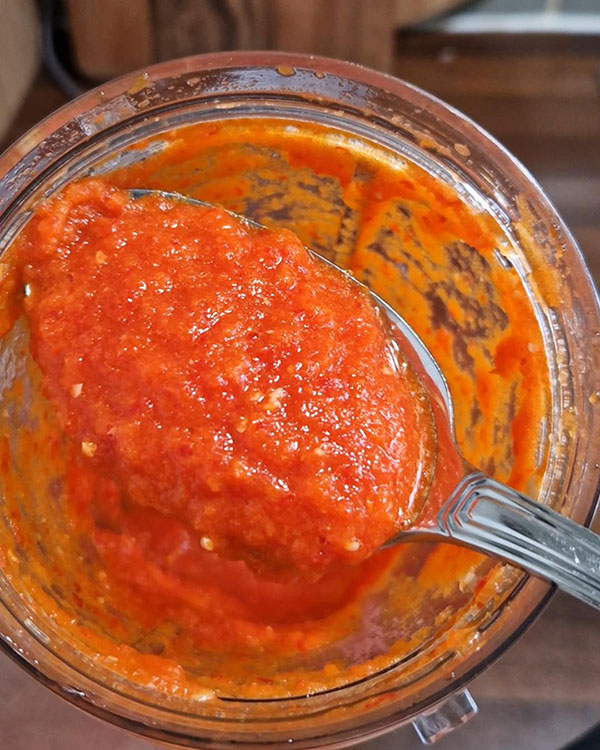
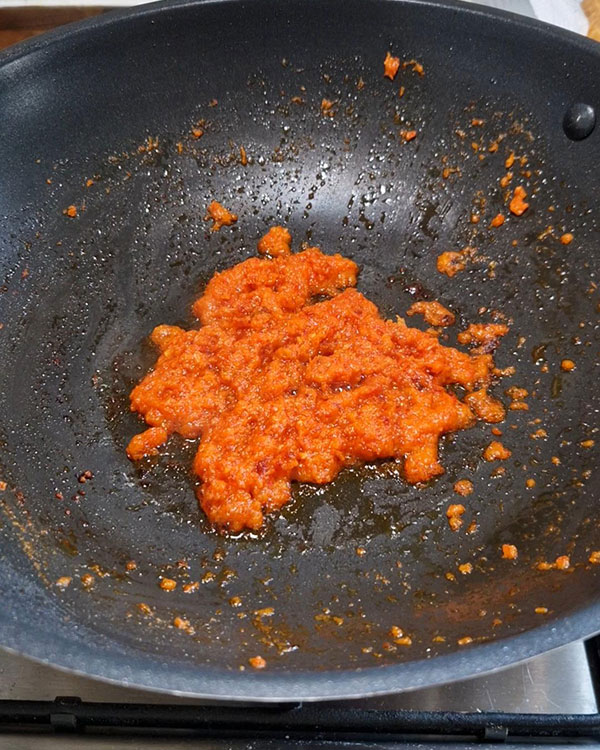
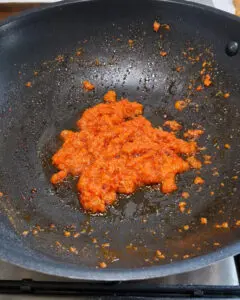
The important part is cooking the chilli paste properly. Fresh chillies contain a fair amount of water, and we need to cook that off before adding the remaining ingredients.
We need the paste to get to the pecah minyak stage, or oil separation – remember this? Click the link below to read more.
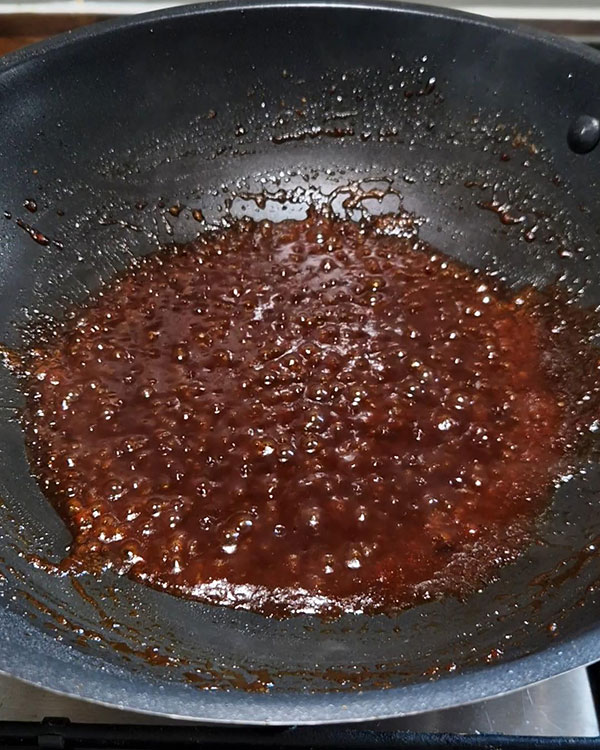
We then add the sugars, seasoning etc, that cooks into a glossy glaze.
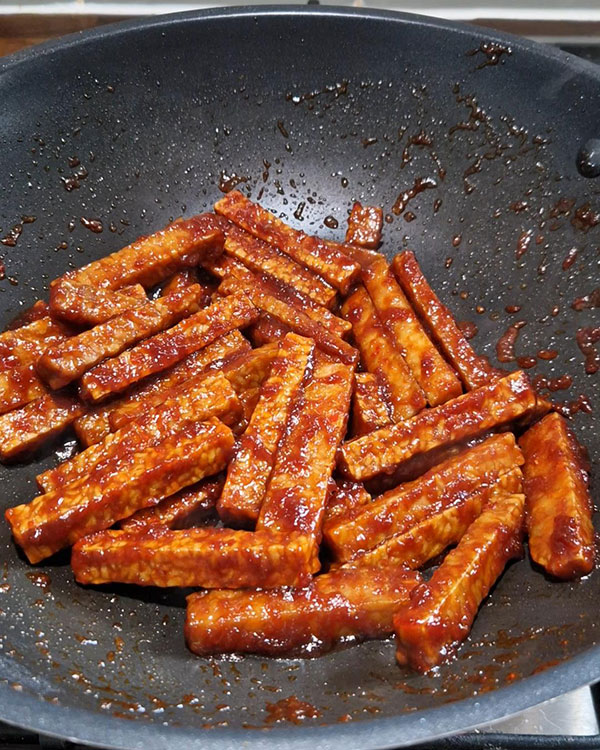
The final step is to toss the fried tempeh in the sambal while the heat is still on, just long enough for everything to come together.
A few things to watch
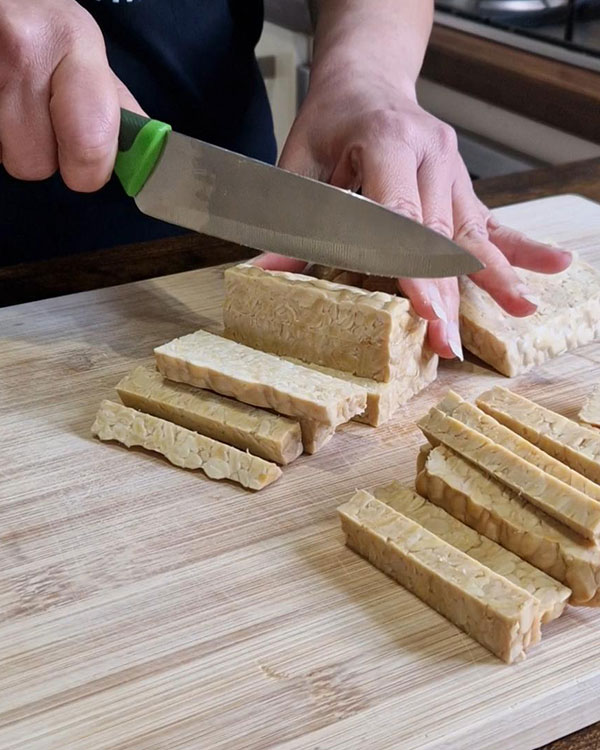
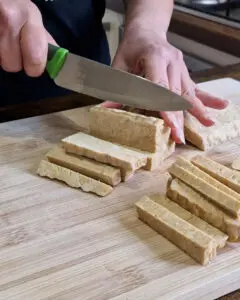
Cut the tempeh fairly thinly. I like matchsticks for this, as they give us plenty of surface area for the sambal to cling to. If your tempeh comes in cylindrical blocks, as mine did, simply cut it lengthways into slabs first.
Don’t rush the chilli paste. It should lose its raw smell and become noticeably thicker before you add the glaze ingredients. This is where most of the cooking time goes.
Keep the sambal glossy, not dry. We’re not making a hard caramel or a dry, crunchy coating. The finished sauce should be thick enough to cling to the tempeh while remaining slightly sticky.
Can You Make Tempeh Sambal in the Air Fryer or Oven?
Absolutely. Although I prefer frying the tempeh in oil for this recipe, you can use an air fryer or oven to get it golden and crisp before adding it to the sambal.
Air Fryer Tempeh
- Preheat your air fryer to 190°C (375°F).
- Toss the sliced tempeh with 1 Tbsp neutral oil and arrange in a single layer in the basket. Cook for 10-14 minutes, shaking halfway through, until golden brown and crisp. You may need to cook it in batches.
Oven Baked Tempeh
- Preheat the oven to 200°C fan (400°F convection) or 220°C conventional (425°F).
- Toss the sliced tempeh with 1-1½ Tbsp neutral oil and spread on a large baking tray in a single layer.
- Bake for 18-25 minutes, turning halfway through, until golden and crisp.
- Whichever method you choose, add the tempeh to the prepared sambal while the heat is still on and toss for 1 minute, just as you would with the fried version.
Ingredients for Sticky Tempeh Sambal
We’re using a fairly short list of ingredients, most of which you may already have if you cook Malay food regularly.
- Tempeh – choose firm, fresh tempeh. We’re cutting it into matchsticks and frying it until golden.
- Fresh red chillies – long red chillies work well here. You can add a couple of bird’s eye chillies if you prefer more heat.
- Shallots and garlic – these form the base of our spice paste.
- Gula Melaka – palm sugar with a lovely caramel flavour. I’m using 30 g, which gives us a rounded sweetness without overpowering the chilli. No gula melaka? Use light soft brown sugar, or just white sugar.
- Caster sugar – just a tablespoon, to complement the palm sugar and help give the sambal its sticky finish.
- Tamarind paste – provides acidity to balance the sweetness.
- Dark soy sauce – a small amount adds savoury depth and a deeper colour. We’re using ordinary dark soy sauce, not sweet soy sauce.
- Salt – only a little, as the soy sauce already contributes some saltiness.
- Neutral oil – for frying the tempeh and cooking the sambal. You can use the same oil for both.
- Water – helps dissolve the sugars and bring the glaze together.
A note on gula Melaka
Gula Melaka is one of those ingredients I always prefer to use when a recipe calls for it, rather than reaching straight for a substitute.
It has a rich, slightly smoky caramel flavour that ordinary sugar doesn’t quite reproduce. This is especially noticeable when you’re using only a handful of ingredients.
That said, you can substitute soft brown sugar if you can’t get hold of it. The dish will still be good. I personally think that dark brown sugar is too strong as a substitute for gula Melaka, but if that’s what you have, go right ahead.
How to Serve Tempeh Sambal
I think this is particularly good with plain steamed rice, which allows the sweet, spicy sambal to do most of the work.
It’s also a lovely addition to Nasi Lemak, alongside the usual accompaniments. You can serve it as an alternative to the traditional seafood-based sambal if you’re putting together a vegan plate.
For a simple meal, I’d have it with rice, sliced cucumber and perhaps some stir-fried greens. Or just a regular green salad.
You could also serve it as one of several dishes at a shared meal. It doesn’t have to be a vegan or vegetarian meal.
Storage and Reheating
Sticky Tempeh Sambal is best eaten freshly made, when the coating is still beautifully glossy and the tempeh has some firmness.
Leftovers can be refrigerated in an airtight container for up to 3 days. Make sure they go into the fridge within 2 hours of cooking.
Reheat in a frying pan over medium-low heat until thoroughly hot, adding a very small splash of water if the glaze has become too thick.
The tempeh will soften a little during storage, but it’ll still taste very good.
Variations
- Hotter sambal: Add 2-3 red bird’s eye chillies to the spice paste. You can also increase the long red chillies slightly, although the heat will depend on the variety.
- Dried chillies: Use about 15 g dried red chillies instead of fresh. Snip them into pieces, soak in just-boiled water for 15 minutes, then drain before blending.
- Less sweet: Reduce the caster sugar if you prefer a sauce that’s slightly less sweet.
- With tofu: Replace some or all of the tempeh with cubes of firm tofu, fried until golden. The tofu will absorb more of the sauce and give the dish a softer texture.
Tempeh Sambal FAQs
This version is completely vegan. Tempeh itself is made from fermented soybeans, and the sambal contains no seafood or other animal-derived ingredients.
However, other recipes may include dried anchovies or fermented shrimp paste, so it’s worth checking if you’re ordering the dish elsewhere.
Yes. You can cook the chilli paste in advance and keep it refrigerated in an airtight container for up to 2 days.
When you’re ready to eat, reheat the paste, add the glaze ingredients and finish with the freshly fried tempeh.
This is particularly useful if you’re preparing several dishes for a meal.
Yes, although sweet soy sauce already contains sugar, so I’d reduce the caster sugar slightly to compensate.
I prefer ordinary dark soy sauce here, as it gives me better control over the sweetness.
Absolutely. Use enough oil to cover the base of your frying pan generously and cook the tempeh in batches, turning it to brown evenly.
Deep-frying is a little easier with thin matchsticks, but there’s no reason you can’t shallow-fry them.
Final Word
And there you have it, Sticky Tempeh Sambal, with its glossy coating and lovely balance of sweetness, chilli heat and tanginess.
It’s a simple dish, and one that’s very easy to fit into an everyday meal. Just give the chilli paste the time it needs, and don’t be tempted to cook the glaze until it’s dry.
If you make this Crispy Tempeh Sambal, do let me know how you get on. Tag me on Instagram with a picture. And if you enjoyed it, I’d appreciate a rating in the recipe card below.
More soon,
Lin xx

Sticky Tempeh Sambal
Equipment
- blender or food processor
- slotted spoon
- kitchen papper
Ingredients
For the tempeh
- 400 g tempeh
- neutral oil for deep-frying
For the sambal
- 4 large fresh red chillies, roughly chopped about 90 g/3 oz
- 3 shallots, peeled about 60 g/2 oz
- 3 garlic cloves peeled
- 3 Tbsp neutral oil preferably from frying the tempeh
- 30 g gula Melaka, finely chopped or grated
- 1 Tbsp caster sugar
- 2 tsp tamarind paste
- 1 tsp dark soy sauce
- 60 ml water
- ⅛ tsp salt or to taste
Instructions
Prepare and fry the tempeh
- Cut the tempeh into thin matchsticks, approximately 3–4 mm thick and 4–5 cm long.
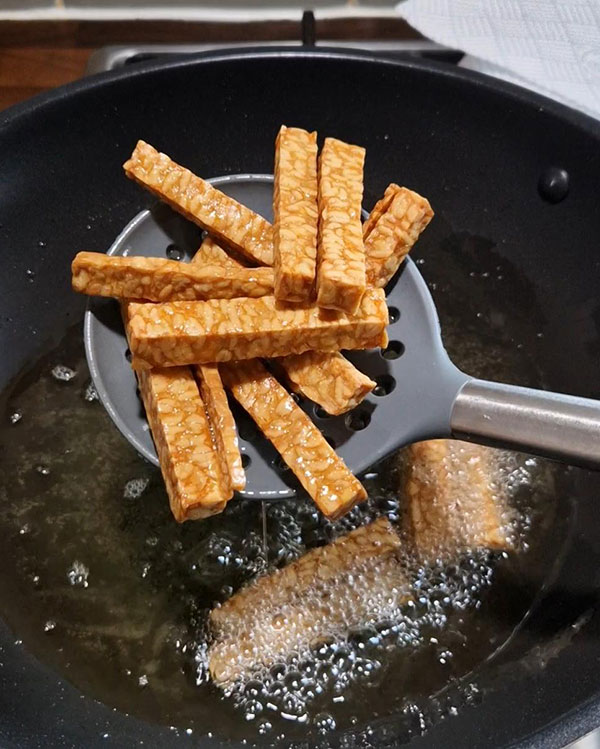
- Heat the oil in a wok or deep frying pan over medium heat to around 170–175°C (340–350°F). If you don’t have a thermometer, dip the end of a dry wooden spoon or chopstick into the oil. A steady stream of small bubbles around it indicates that the oil is hot enough to start frying.
- Fry the tempeh in batches for 4–6 minutes per batch, until golden brown and crisp.
- Remove with a slotted spoon, drain on kitchen paper or a wire rack and set aside.

Make the spice paste
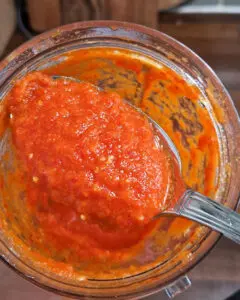
- Place the fresh red chillies, shallots and garlic in a blender or food processor.
- Blend to a fairly smooth paste, adding a very small splash of water only if needed to help the blades turn.
Cook the sambal
- Remove any burnt crumbs from the frying oil and pour off the excess, leaving 3 Tbsp in the wok. Allow the oil to cool slightly before adding the spice paste, as it may splutter.
- Fry the paste over medium-low heat for approximately 10–15 minutes, stirring regularly, until it thickens, darkens slightly and the oil begins to separate.This is the pecah minyak stage, when the oil separates from the cooked spice paste. The raw chilli and onion smell should have disappeared.
- Add the gula Melaka, white sugar, tamarind paste, dark soy sauce, water and salt.
- Cook over medium-low heat for about 2 minutes, stirring regularly, until the sugars dissolve and the sambal becomes glossy and slightly syrupy.
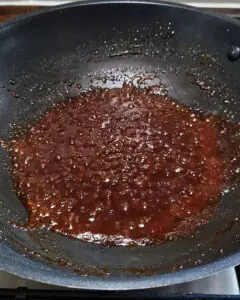
- Taste and adjust the seasoning if necessary.
Add the tempeh
- Keeping the heat on, add the fried tempeh directly to the sambal.
- Toss thoroughly to coat all the pieces, then continue cooking and stirring for 1 minute, until the tempeh is heated through and evenly coated in the sticky sambal.

- Remove from the heat and serve with steamed rice.
Notes
Nutrition
Enjoyed this recipe? Add us to your Google Search Preferred Sources: