

Enjoyed this recipe? Add us to your Google Search Preferred Sources:
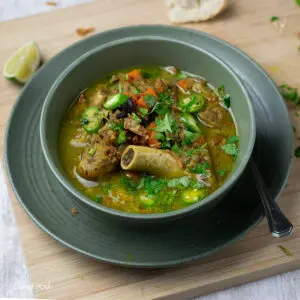
Sup Kambing, the incredibly aromatic mutton soup of Indian Muslim origin, is a flavour bomb from the mamak stalls of Singapore and Malaysia. With coriander, cumin, and a heap of heritage, it’s the sort of soup that warms your belly and your soul.
Estimated reading time: 10 minutes
Table of contents

What is Sup Kambing?
In Malay, sup means soup and kambing usually refers to goat. In Singapore and Malaysia, however, sup kambing is commonly described in English as mutton soup and may be made with goat, mutton or lamb. It’s a brothy bowl of magic, rich with coriander, fennel, cumin, and all the warming spices your soul didn’t know it needed.
It’s not just soup; it’s an experience. Shaped by Indian Muslim cooks in Singapore and Malaysia, with influences from Chinese and Malay cooking, this greenish-golden wonder is what happens when bold spices meet slow-simmered comfort.
Forget delicate consommés, this is a sharp, spice-forward soup that demands attention. Usually served with baguette, Sup Kambing is the perfect excuse to slurp.
What is Mamak?
Mamak is the colloquial name given to the Indian Muslim food stalls and eateries found across Singapore and Malaysia.
The word comes from the Tamil mama, meaning uncle. Sup kambing is one of the dishes closely associated with these stalls, alongside mee goreng mamak, roti prata or roti canai, murtabak and teh tarik.
Sup Kambing Recipe
It’s a very easy recipe to make, and while the total cooking time is 2 hours or so, the actual hands-on time is no more than 20 – 30 minutes. The rest of the time, it’s on the stove simmering away.
So yes, it can be made in a slow cooker or Instant Pot. Times will be just like any stew or long cooking curry. I don’t use either, so I shan’t give you times for it, as you’ll know better if they are a part of your kitchen.
This is what we’ll be doing to cook this soup kambing recipe:
- Prep work – chopping, dicing, etc.
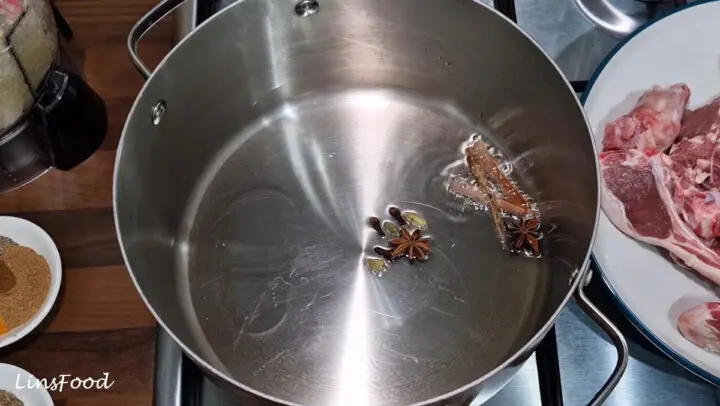
- Fry the whole spices for 30 seconds, then add the ground up aromatics.
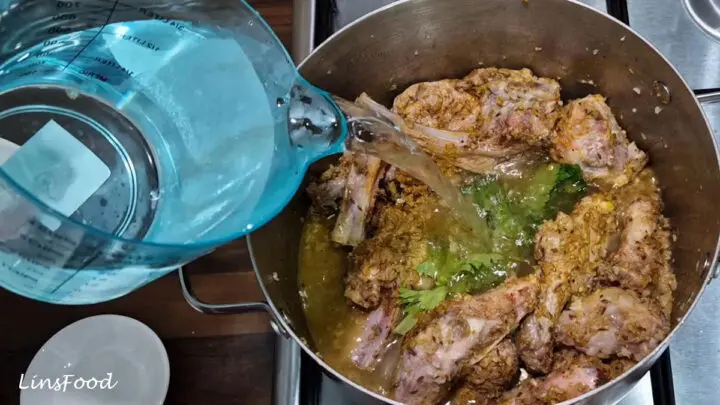
- Add the lamb and ground spices, followed by the water. Simmer for 1 hour.
- Add the diced vegetables, simmer for another hour.
- Serve up, garnish with coriander leaves (cilantro) green chilli slices and crispy fried shallots (or onions).
That’s it, done. Doable, right?
What makes a good Sup Kambing?
Time, bones, and a bit of drama. A great Sup Kambing is all about coaxing flavour from meaty bones over a slow simmer until the broth turns rich and slightly cloudy.
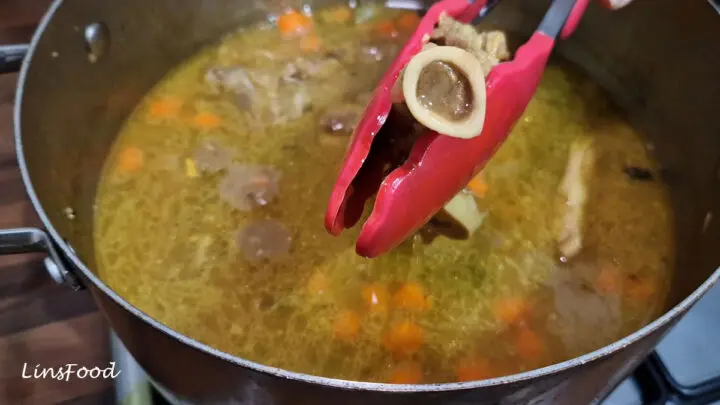
The meat should be tender enough to fall apart at the nudge of a spoon. Bonus points if the soup has that signature greenish tint from coriander, because colour matters too!
Goat, Mutton or Lamb?
Traditionally, this hawker centre favourite is made with goat meat or mutton – robust, gamey, and perfect for soaking up all those heady spices. But lamb works beautifully too. It’s gentler, softer, and gives you that same rich broth without the heavy punch.
What’s the difference between mutton and lamb?
Mutton is the meat from a mature sheep, usually over 2 years of age. Lamb on the other hand, is the meat of a young sheep, below the age of 1.
I’m also not a fan of either goat meat or mutton, so lamb is always my preferred meat.
Now, about that eternal kitchen debate: more meat or more bone? The answer is both. You need the meaty bones to give the soup its silky depth, and the chunks of meat for texture. This isn’t a place for lean cuts – this is where flavour lives.
So what do I do when cooking sup kambing?
I use lamb chops with extra bones from the butcher for more flavour. Lamb chops have bones and meat on them, so the best of both worlds. Extra bones add even more flavour to the broth.
I employ this same method when cooking Feng, that festive Eurasian offal dish, adding lamb chops to the broth for more flavour.

Soup Kambing Ingredients
Don’t be put off by the rather long list of ingredients in the recipe card below. They are all everyday items like your spices and aromatics.
Ground coriander is the main spice here, giving the broth its earthy, citrusy flavour. Cumin and fennel add warmth and a slight sweetness, while the cinnamon, cloves, cardamom and star anise give sup kambing its unmistakable fragrance. The turmeric adds colour and the black pepper provides much of the heat.
Let’s talk about the vegetables used when we cook this Singaporean and Malaysian mutton soup. The “standard” vegetables are carrots, tomatoes and optional potatoes. We don’t use much, just a small amount, because sup kambing is more a broth than a stew. So we keep it light.
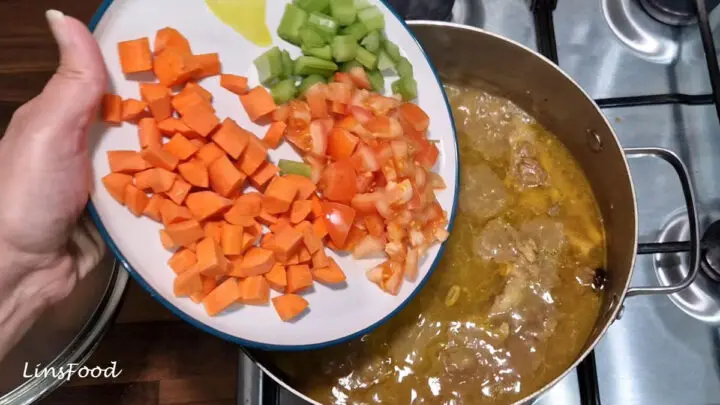
And this is why if you do use potatoes, you don’t want too much as that’ll thicken the soup. You’ll notice that I’m not using any. If you want to add it to this recipe here, just 1 medium-sized potato, diced, added with the other vegetables.
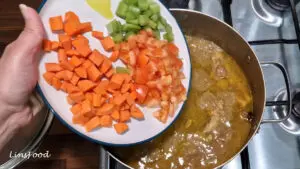
I like to add 1 stick of celery to the mix because celery is made for soups and stews! We dice all our vegetables into tiny pieces, smaller than bite-sized pieces.
The butter added when serving is entirely optional. I like the extra richness it gives the broth, but the sup kambing won’t be lacking without it. The lime, fresh coriander, green chilli and fried shallots provide the fresh, sharp and crunchy finish.

What gives Sup Kambing its rich flavour?
Magic. And by magic, I mean the bones, marrow, and all those spices. Long, patient simmering lets the fat, collagen, and aromatics mingle into one luxurious, soul-hugging potion. You’ve got depth, brightness, and comfort all in one steamy bowl. The kind of flavour that makes you wonder why you ever bothered with plain old chicken soup.
You’ll spot a bowl of Sup Kambing from a mile away thanks to its slightly greenish-gold broth. That colour’s no accident; it’s from coriander, turmeric, and sometimes even a sneaky handful of mint or green chilli.
The result? Layers of earthy, peppery, citrusy, spicy perfection. Every sip is a story – one that starts in India and ends at a hawker centre in Singapore at 2 a.m. Or Malaysia.
It’s not just food. It’s nightlife in a bowl. So the next time someone tells you soup is boring, hand them a bowl of Sup Kambing. Watch their eyes widen. That’s the look of someone discovering aromatic mutton soup royalty.
Is Sup Kambing spicy?
Sup Kambing brings a confident kind of heat. Think warming spices like black pepper, cumin, coriander, and ginger doing a slow dance with the broth. It’s more “cosy spice hug” than “five-alarm chilli panic.” So maybe, it’s a little spicy, but in a deliciously aromatic, keep-sipping kind of way.
How to Serve Sup Kambing
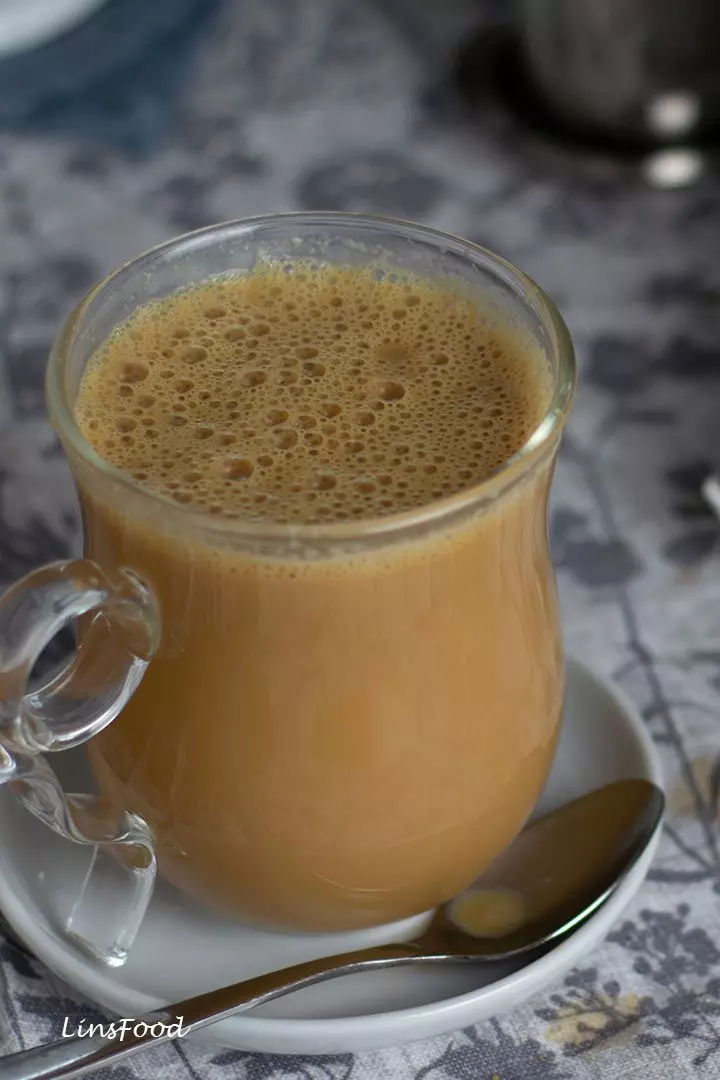
Sup Kambing doesn’t need fancy plating. Pour it piping hot, garnish as described below and dunk your bread right in. Want to do it like the locals do? Pair it with iced Milo or hot teh tarik. That’s how we do it at mamak stalls across Malaysia and Singapore.
It’s the ultimate late-night mamak dish, equal parts comfort and chaos, perfect after football matches, long workdays, or heartbreaks. Or, as in my case, clubbing. This is Singaporean and Malaysian comfort food at its most rustic.
My Sup Kambing Memories
I have many, many fond memories of enjoying a bowl of steaming sup kambing at the old Newton Road Hawker Centre, one of our go-to places after a night out. Unfortunately, it was apparently featured in the movie “Crazy Rich Asians” and is now a tourist trap with silly prices.
How to Store Leftover Sup Kambing
On the off chance you’ve managed not to drink the pot dry, like all stews and curries, Sup Kambing is better the next day. Once it’s cooled, pop it into an airtight container and refrigerate for up to three days.
The spices will deepen, and the broth gets even silkier. To reheat, just warm it gently on the stove, adding water if necessary.
Once it’s cooled, you’ll see a layer of fat at the top. Feel free to scrape it off if you’re not keen, to make it just that little bit healthier!
You can also freeze sup kambing for up to two months. Store it in an airtight container and defrost and heat up when ready to serve.
Sup Kambing FAQs
Yes. I use lamb because its flavour is gentler than goat or mutton and it becomes tender more quickly. Bone-in lamb also produces a richer broth than completely boneless meat.
Lamb chops, neck, shoulder and shank all work well. Choose a bone-in cut with some connective tissue rather than very lean, boneless lamb.
It can be made with either. Although kambing usually refers to goat, versions sold in Singapore and Malaysia may use goat, mature sheep or lamb.
Not this version. It gets its body from the meat, bones, aromatics and long cooking time rather than coconut milk.
It’s warmly spiced rather than fiercely hot. Most of the heat comes from black pepper, ginger and the optional fresh green chilli.
They overlap, but they aren’t always the same dish. Sup kambing refers broadly to goat or mutton soup, while sup tulang places greater emphasis on the bones and marrow. Some Singapore versions of sup tulang also have a much redder, thicker gravy.
Yes. In fact, its flavour deepens after a night in the fridge. Cool it promptly, refrigerate it in a covered container and reheat it thoroughly on the stove.
Yes. Freeze the cooled soup in airtight containers for up to two months. Defrost it in the fridge and reheat gently, adding a splash of water if the broth has become too concentrated.
Final Word
And there you have it, a pot of sup kambing with tender lamb, a deeply spiced broth and plenty of bread-dunking potential. If you use goat or mutton instead, give it all the simmering time it needs; this is a soup that rewards patience.
Any questions, just drop me a line. Take a picture and tag me @azlinbloor on Instagram or Facebook.
More soon,
Lin xx
Sup Kambing Recipe (Lamb or Mutton Soup)
Ingredients
- 750 g bone-in lamb or mutton read article above on ratio of bones to meat (I use lamb chops with a couple of extra bones from the butcher if available)
- 1.5 litres water
- 2 Tbsp vegetable oil or any other neutral oil
Aromatics
- 2 medium onions
- 3 cloves garlic
- 5 cm ginger
Dry Spices and Seasoning
- 1 cinnamon stick
- 3 cloves
- 3 cardamom pods
- 2 star anise
- 1 tsp fennel seeds or 3/4 tsp ground
- 1 tsp cumin seeds
- 2 Tbsp ground coriander
- 1 tsp turmeric powder
- 1 tsp black pepper
- 1 tsp salt or to taste
Vegetables and Herbs
- 1 carrot
- 1 stalk celery, along with a few leaves attached
- 1 potato optional, I'm not using it in the video
- 2 medium tomatoes
To Serve
- 30 g salted butter optional
- 1 small handful coriander leaves and stalks
- 1 green chilli sliced (optional, for extra heat)
- crispy fried shallots
- lime wedges for everyone
- baguette or any bread
Instructions
Prep Work
- Aromatics. Peel and roughly chop the onion, garlic and ginger. Grind to a smooth paste in a food chopper or pound with a pestle and mortar. Set aside.
- Vegetables. Scrub or peel the carrot and chop into cubes. Do the same with the celery and potato (if using). Reserve the celery leaves.Chop up the tomatoes into little pieces as well.
Let's Get Cooking
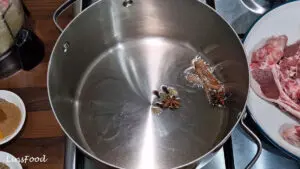
- Heat oil in a large pot and fry the cinnamon, cloves, cardamom, star anise, fennel and cumin seeds for 30 seconds, until fragrant.
- Add the onion, garlic and ginger paste and sauté for 3 minutes, until fragrant.
- Add the lamb or mutton pieces and bones and sear until lightly browned.
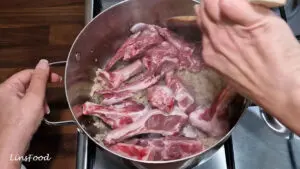
- Stir in the coriander powder, turmeric, black pepper, and salt. Mix well.
- Pour in the water and reserved celery leaves, bring to a boil, then lower the heat and let it simmer for 1½ – 2 hours, or until the meat is fork tender.
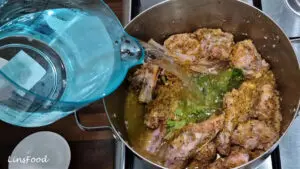
- Add the tomatoes, carrots, celery and potato, if using, after 1 hour. Bring everything back to a simmer and continue cooking until the meat is fork-tender.
- Coriander leaves and green chillies. Finely chop the coriander leaves and slice the green chillies. You could do this earlier but I prefer to leave it until the stew is done to stop the coriander leaves from wilting.
- Taste and adjust the seasoning to your taste (more salt, perhaps?).
- Serve hot in bowls, topped with a little butter, chopped coriander leaves and sliced chillies, with a wedge of lime for everyone. And lots of bread.
Notes
Nutrition
Enjoyed this recipe? Add us to your Google Search Preferred Sources: